Grab your favorite charcoal and feel that slight grit against your fingertips. There is something primal about the way a soft 4B lead shears against the tooth of a heavy cold-press paper. To master your craft, you need a consistent Daily Sketching Practice that bridges the gap between what your eyes perceive and what your hand executes. It is not just about making pretty pictures; it is about the physics of light hitting a three-dimensional form and translating that energy into a two-dimensional plane. We are diving deep into the tactile reality of anatomy, weight distribution, and the sheer tensile strength of your artistic focus.
THE STUDIO KIT
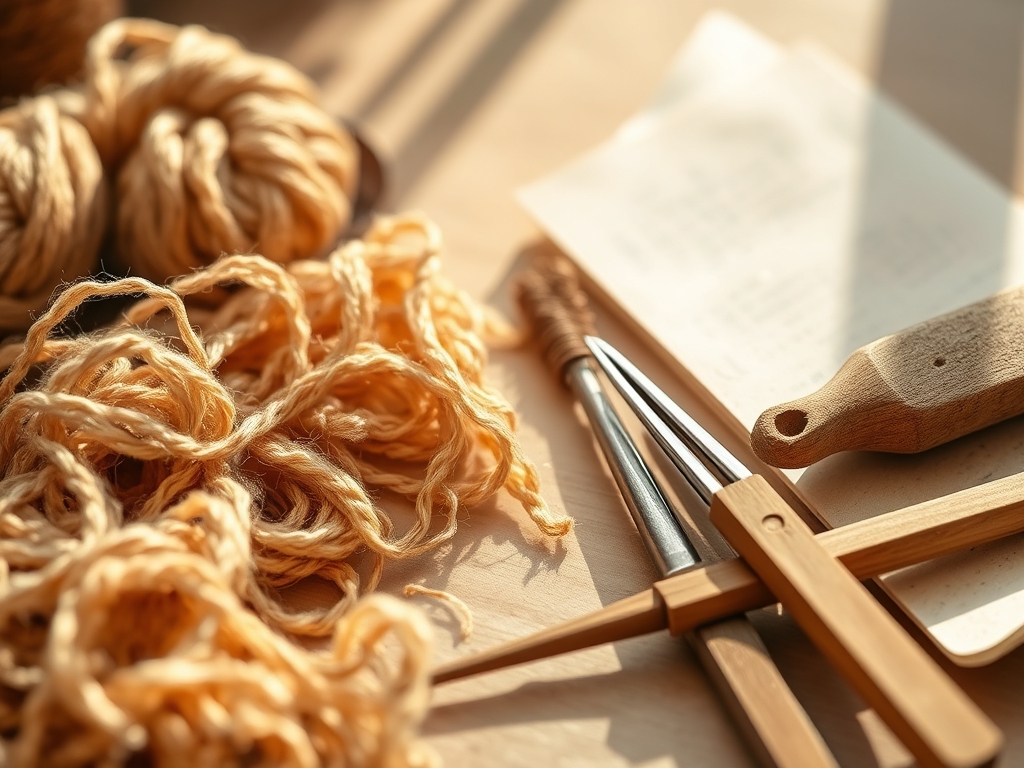
To execute these prompts effectively, you need tools that respond to the micro-movements of your wrist. Start with a range of graphite pencils from 2H to 6B. The 2H offers a high clay-to-graphite ratio for structural under-drawings, while the 6B provides a dense, porous application for deep shadows. You will also need a **kneaded eraser**, which functions via adhesion rather than friction; it lifts pigment without damaging the delicate fibers of the paper. For measuring proportions, a pair of **calipers** or a simple wooden skewer will act as your proportional divider.
If you are working with wet media, ensure your paper has a high gsm (grams per square meter) to prevent buckling from capillary action. Material Substitutions: If you lack professional charcoal, a burnt willow twig from a fire pit offers a surprisingly similar carbon density. Instead of a blending stump, a piece of soft chamois leather or even a felt scrap can burnish your gradients into a seamless transition. Always check the grain direction of your paper; sketching against the grain can create a stuttering line that disrupts your flow.
THE TEMPO
The "Maker's Rhythm" is a biological synchronization between your respiratory rate and your stroke speed. For a Daily Sketching Practice, you should allocate sixty minutes total. The first ten minutes are for high-velocity "gesture" work to warm up your neural pathways. The next thirty minutes involve the "Deep Observation" phase, where your heart rate slows and your focus narrows. The final twenty minutes are for refinement and structural correction. This tempo prevents "stiffening," a common technical failure where the artist over-thinks the anatomy and loses the fluid kinetic energy of the pose.
THE CORE METHOD
1. The Blind Contour Challenge
Force your brain to stop "symbol drawing" by looking only at the subject and never at your paper. This strengthens the hand-eye circuit. As your pencil moves, imagine it is a physical probe traveling over the surface tension of the subject's skin.
Mastery Tip: This exercise utilizes proprioception, the body's ability to sense self-movement and body position. By removing visual feedback, you force your brain to rely on the tactile memory of the pencil's resistance against the paper.
2. The Ten-Line Gesture
Capture the entire essence of a pose using only ten continuous lines. This requires you to identify the line of action, which is the primary curve of the spine or the main vector of force in a figure.
Mastery Tip: Focus on the center of gravity. If the subject's weight is not balanced over their base of support, the drawing will lack structural integrity and appear to be "falling" off the page.
3. Negative Space Silhouettes
Instead of drawing the person, draw the shapes of the air around them. Look for the triangles between an arm and a torso. This bypasses the brain's tendency to simplify complex anatomy into known icons.
Mastery Tip: This relies on figure-ground perception. By focusing on the "ground" (the background), you accurately define the "figure" without the bias of anatomical assumptions.
4. The Anatomical Landmark Map
Identify the bony protrusions where the skin is thinnest, such as the acromion process of the shoulder or the medial malleolus of the ankle. Mark these with precise, sharp points using a high-gauge lead.
Mastery Tip: These landmarks are fixed points of skeletal rigidity. Unlike muscle or fat, they do not shift significantly with movement, providing a reliable geometric anchor for your proportions.
5. Planar Analysis Lighting
Imagine the human body is made of flat, chiseled planes like a diamond. Use a single light source to identify which planes are in direct light, which are in half-tone, and which are in core shadow.
Mastery Tip: Use the Inverse Square Law of light. The intensity of light changes drastically over the curvature of a form; understanding this allows you to create the illusion of three-dimensional volume on a flat surface.
6. Foreshortening with Overlapping Shapes
Draw a figure where a limb is pointing directly at the viewer. Use overlapping circles to represent the varying depths of the arm or leg as it recedes in space.
Mastery Tip: This addresses optical compression. When an object is foreshortened, its longitudinal axis appears shorter, requiring you to trust your measurements over your intuitive sense of "how long an arm should be."
7. The Weighted Line Weight
Use a thick, heavy line for parts of the body under compression (like the bottom of a foot) and a thin, ethereal line for parts under tension or in bright light.
Mastery Tip: Line weight mimics the physics of ambient occlusion. Darker, thicker lines naturally occur in crevices where light cannot easily bounce, providing instant depth without complex shading.
8. The Five-Minute Value Study
Using only three tones (white, mid-gray, and black), block out the major masses of a figure. Do not draw any outlines; define the edges only through the meeting of two different values.
Mastery Tip: This exercise exploits contrast sensitivity. By removing the "crutch" of the outline, you force your brain to interpret form through the physics of light reflection and absorption.
THE TECHNICAL LEDGER
Maintaining your workspace is vital for long-term success. Store your sketches in a pH-neutral, acid-free portfolio to prevent the lignin in the paper from oxidizing and turning yellow. If using charcoal or soft graphite, apply a fine mist of fixative spray in a well-ventilated area. This resin-based coating bonds the loose particles to the paper fibers, preventing smudging.
Material Variations: For a premium experience, try vellum-finish Bristol board, which has a specific ply thickness designed to withstand heavy erasing. For a sustainable route, look for bamboo-fiber paper, which offers a unique, fibrous texture that grips dry media exceptionally well.
The Correction:
- The "Muddy" Shadow: Caused by over-blending. Fix this by using a kneaded eraser to "dab" out the excess graphite, then re-establish your darks with crisp, un-blended strokes.
- Proportional Drift: When one limb is too long. Use a bone folder to gently burnish the paper flat after erasing, then use your calipers to re-measure the head-to-body ratio (usually 1:7.5).
- Paper Tearing: Caused by high-pressure 2H lines. Fix this by switching to a softer lead and letting the pigment density create the darkness rather than physical force.
THE FINAL REVEAL
There is a distinct "click" that happens in your brain when a Daily Sketching Practice takes hold. You start seeing the world not as objects, but as a series of interlocking forces and light values. Your sketches will transform from stiff, hesitant marks into confident, structural records of life. You have successfully navigated the physics of the human form; now, keep that momentum going and let your sketchbook become a testament to your technical evolution!
STUDIO QUESTIONS
How do I stop my sketches from smudging?
Apply a light coat of workable fixative or hairspray. This creates a microscopic resin shield over the graphite. For a mechanical fix, always place a "slip sheet" of tracing paper between your sketchbook pages to prevent friction-based transfer.
What is the best paper for daily practice?
Look for a 70lb to 90lb (100-150 gsm) weight paper with a "medium tooth." This provides enough texture to grab the graphite without being so rough that it wears down your pencil nibs prematurely.
How can I improve my hand-eye coordination quickly?
Perform blind contour drawings for ten minutes every morning. This recalibrates your neural pathways to prioritize visual input over the "symbolic" shortcuts your brain usually takes when identifying shapes like eyes or hands.
Why do my drawings look "flat" even with shading?
You likely lack a core shadow and a reflected light zone. Physics dictates that light bounces off surrounding surfaces and back into the shadow side of an object. Adding that sliver of reflected light creates immediate three-dimensional volume.