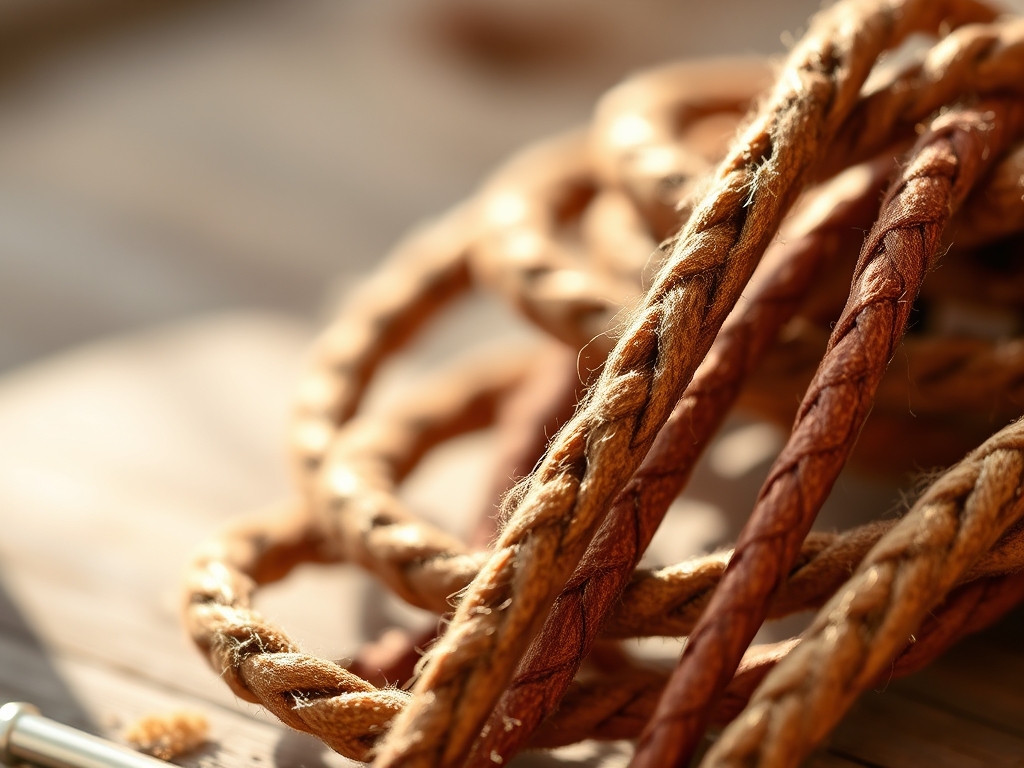
Close your eyes and listen to the sound of a sharp rotary blade slicing through a premium hide. It is a crisp, rhythmic "shhh" that signals the birth of something permanent. When you hold raw, vegetable tanned leather, you feel the fibrous density and the slight oily residue of natural tannins against your skin. Creating Handmade Leather Cords is not just about cutting strips; it is about mastering the tensile strength of a biological material. We are moving beyond the flimsy, store bought strings that snap under the slightest pressure. Today, we are engineering wearable art that balances flexibility with structural integrity. You can smell the earthy, rich aroma of the tannery as you unroll the side. It is tactile, it is grounded, and it is incredibly satisfying to manipulate. As your best friend in this high energy studio, I am going to show you how to transform a flat sheet of cowhide into a rounded, sleek cord that feels like silk but performs like steel. We are diving deep into the physics of friction and the magic of moisture.
THE STUDIO KIT
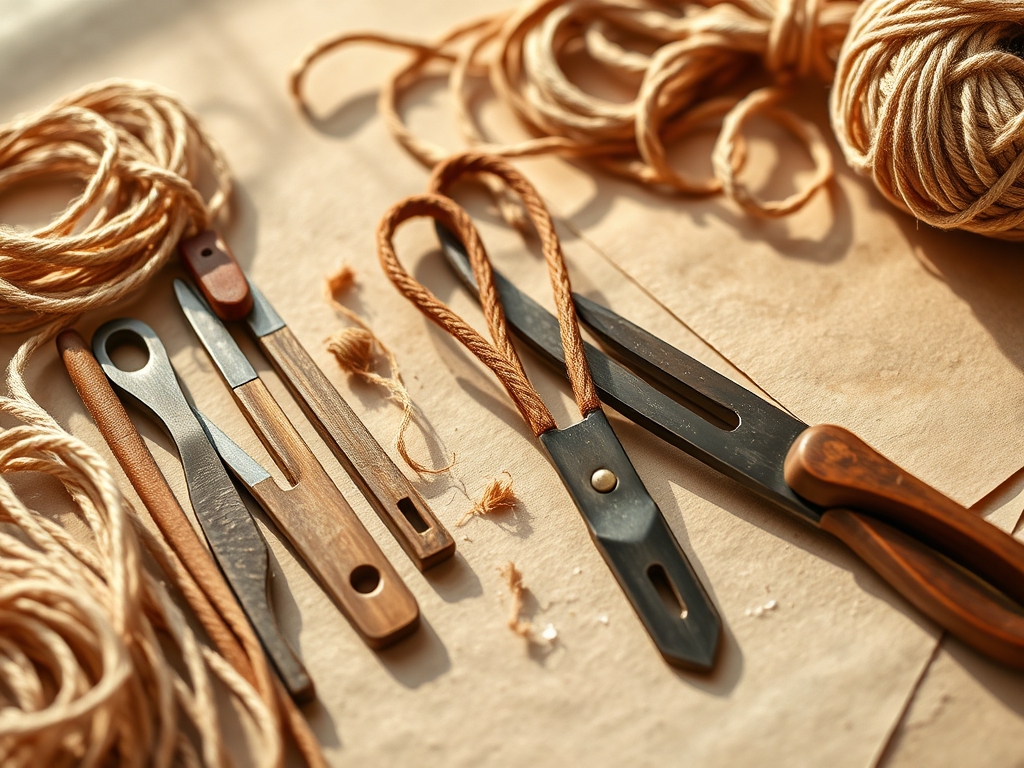
To master Handmade Leather Cords, your workbench needs more than just scissors. You need a **rotary cutter** with a 45mm tungsten steel blade for clean, non-frayed edges. A **strap cutter** is your best friend here; it uses a calibrated wooden gate to ensure every millimeter of width is identical. You will also need a **bone folder** for creasing, a **stitching awl** for piercing, and a **burnishing tool** made of exotic hardwood to heat seal the edges through friction. For the chemical side, grab some **Tragacanth gum** or beeswax to slick the fibers down.
Material Substitutions: If you cannot source full grain cowhide, look for Kangaroo leather. It has the highest tensile strength of any hide relative to its thickness, allowing for incredibly thin yet unbreakable cords. For a vegan alternative, cork cord offers a similar tactile grip but requires a different adhesive strategy due to its cellular porosity. Always keep a pair of digital calipers nearby to measure the gauge of your cord as you work.
THE TEMPO
The Maker's Rhythm is a three phase cycle: Preparation, Execution, and Curing. The Preparation Phase takes about 20 minutes; this involves hydrating the leather to reach the "cased" state where it is most malleable. The Execution Phase is the heart of the work, taking 45 to 60 minutes depending on the length of your necklace. This is where you find your flow, maintaining a consistent ergonomic posture to ensure even tension. Finally, the Curing Phase requires 24 hours. You cannot rush the evaporation of moisture. If you stress the fibers while they are still damp, you risk permanent deformation of the grain.
THE CORE METHOD
1. The Precision Strip Cut
Start by identifying the longitudinal grain of the leather. Leather stretches more in one direction than the other. You must cut parallel to the spine for maximum durability. Use your strap cutter to pull a consistent 3mm strip from the hide.
Mastery Tip: This relies on shear strength. By cutting with the grain, you align the collagen fibers, ensuring the cord will not "neck down" or thin out when a heavy pendant is added.
2. Beveling the Square Edges
A square strip feels amateur. Use a size 00 edge beveler to remove the sharp 90 degree corners from both the grain side and the flesh side. This creates a hexagonal profile that is easier to round.
Mastery Tip: Beveling reduces surface area friction against the skin, making the necklace feel significantly smoother and preventing the "digging" sensation of raw edges.
3. The Hydration Soak
Submerge your beveled strip in lukewarm distilled water for approximately three minutes. You are looking for the leather to stop bubbling, indicating that the porous internal fibers are fully saturated.
Mastery Tip: This involves capillary action. Water acts as a lubricant between the microscopic fibers, allowing them to slide past each other and compress without snapping during the rounding process.
4. The Wooden Block Compression
Place the damp strip between two smooth, flat boards. Apply heavy downward pressure and pull the leather through the "sandwich" multiple times. This flattens the fibers and begins the rounding process.
Mastery Tip: This is a lesson in plastic deformation. You are forcing the leather to take a new shape while it is in its most compliant state, effectively "re-molding" the biological structure.
5. The Draw Plate Refinement
Pull the damp cord through a jeweler's draw plate or a custom wooden block with graduated holes. Start with a hole slightly larger than your cord and work your way down to the desired gauge.
Mastery Tip: This utilizes radial compression. As the leather passes through the circular aperture, the fibers are squeezed inward, increasing the density and creating a perfectly uniform diameter.
6. The Friction Burnish
Apply a small amount of Tragacanth gum to the cord. Use a canvas cloth or a wooden burnisher to rub the cord vigorously until it becomes hot to the touch.
Mastery Tip: The heat generated by friction causes a chemical reaction with the tannins and the gum, creating a hard, glossy "glassed" surface that protects the interior from sweat and oils.
7. The Tensile Stress Test
Once the cord is shaped, hang it vertically with a small weight attached to the bottom while it dries. This ensures it cures in a perfectly straight line.
Mastery Tip: This prevents elastic recoil. By drying under tension, the fibers set in their elongated state, ensuring the necklace won't "shrink" or curl once the hardware is attached.
8. The Conditioning Seal
After the cord is 100 percent dry, apply a light coat of neatsfoot oil or a beeswax conditioner. This restores the lipids lost during the soaking process.
Mastery Tip: Leather is a hygroscopic material. Conditioning creates a moisture barrier that prevents the cord from becoming brittle over time, maintaining its "hand" and drape.
THE TECHNICAL LEDGER
To ensure longevity, never store your cords in direct sunlight; UV rays break down the protein bonds in the leather. For Material Variations, try using recycled leather scraps for a rugged, braided look, or premium goatskin for a softer, more luxurious feel.
The Correction:
- The Snap: If the cord breaks during drawing, your leather was too dry. Re-hydrate and check for "fat wrinkles" which are structural weak points.
- The Fuzz: If the cord stays "hairy," your burnishing tool wasn't moving fast enough to generate heat. Increase your speed, not your pressure.
- The Bleed: If the dye rubs off, you skipped the sealing phase. Apply a professional acrylic resolene to lock in the pigment.
Studio Organization: Store your finished Handmade Leather Cords by hanging them on a pegboard or winding them around large diameter acid free spools. Never fold them; sharp creases can rupture the grain and create permanent weak spots.
THE FINAL REVEAL
Look at that! You have successfully engineered a piece of hardware that is as tough as it is beautiful. The cord has a deep, lustrous sheen and a weight that feels substantial. It drapes perfectly around the neck, responding to body heat by becoming even more supple. You have mastered the physics of the hide, and your jewelry is now elevated to a professional, "boutique" standard.
STUDIO QUESTIONS
How do I make my leather cord waterproof?
Apply a heavy coat of beeswax and use a heat gun to melt it into the fibers. This creates a hydrophobic barrier. However, frequent submersion will eventually degrade the tannins, so avoid wearing it in the pool.
What is the best leather thickness for necklaces?
A thickness of 1.5mm to 2.0mm (approximately 4 to 5 ounces) is ideal. This provides enough mass to be durable while remaining flexible enough to knot or attach to metal end caps without bulk.
Why is my handmade cord stretching out?
You likely cut the strip across the belly of the hide rather than the spine. The belly has a loose, erratic fiber structure. Always use the "back" or "butt" portions of the hide for high tension projects.
Can I dye the cord after it is rounded?
Yes, but it is difficult to get even penetration. It is better to dye the flat strip before the hydration soak. This ensures the pigment reaches the core of the cord during the compression phases.