Imagine the scent of freshly sheared wool or the crisp, metallic tang of a jeweler's saw slicing through sterling silver. There is a specific, electric thrill that happens when your hands connect with raw material. It is more than just a hobby; it is a physical dialogue with physics and form. When you dive into the art of crafting for gift giving, you are not just making a trinket. You are manipulating molecular structures and testing the tensile strength of fibers to create something that defies the ephemeral nature of store bought goods. Whether it is the gritty texture of high fire stoneware or the buttery glide of a bone folder across heavy cardstock, every sensation tells you exactly how the material will behave under pressure. We are about to transform that creative spark into a year round cycle of thoughtful, high precision production that will leave your friends wondering if you secretly moonlight as a master artisan.
THE STUDIO KIT
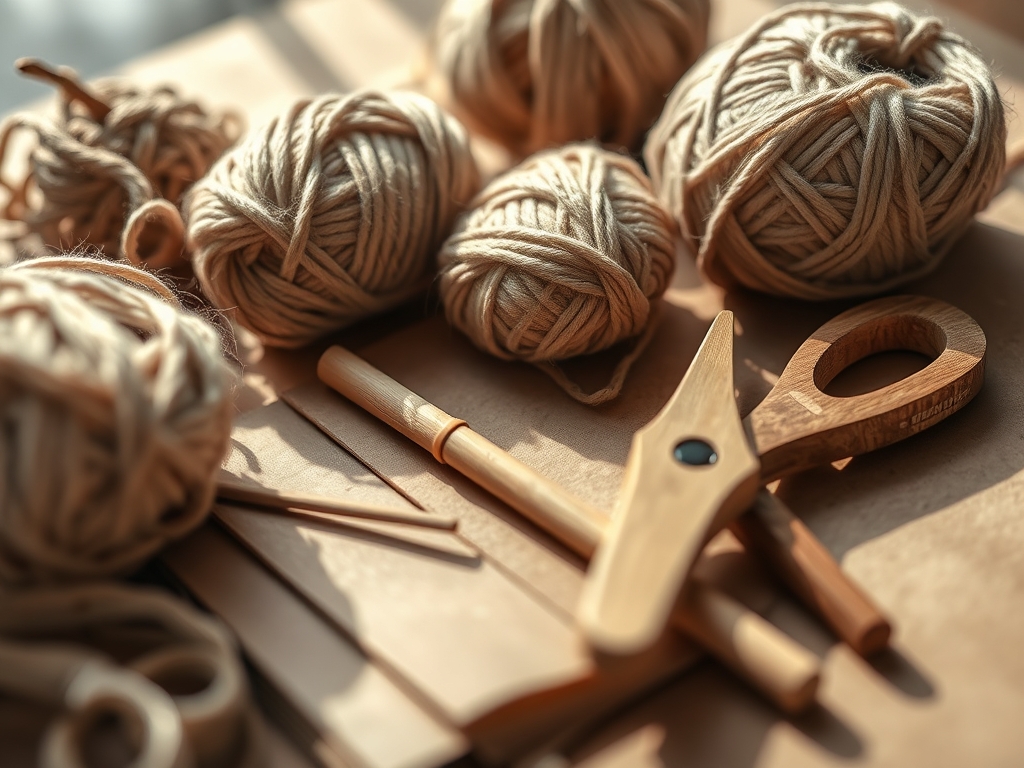
To master the seasonal cycle, your studio must be stocked with tools that respect the integrity of your materials. You will need a **high carbon steel rotary cutter** for clean, fray free edges on textiles; this tool relies on a sharp circumference to distribute pressure evenly without dragging the fabric grain. Keep a set of **digital calipers** on hand to measure thickness in millimeters, ensuring that your leather hides or wood veneers are consistent for structural assembly. For paper and leather work, a **genuine bone folder** is non negotiable for creating crisp, permanent creases by compressing the internal cellulose or collagen fibers.
Material Substitutions are your best friend when supply chains falter. If you cannot find vegetable tanned leather, look for cork fabric, which offers a similar thickness and durability but with a cellular structure that resists moisture naturally. Instead of expensive silk threads, high tenacity mercerized cotton provides a similar luster while offering superior knot security due to its increased surface friction. Always have a precision awl and a variety of gauged wires (18 to 24 gauge) to handle everything from jewelry links to structural supports in mixed media pieces.
THE TEMPO
The Maker's Rhythm is a three phase cycle that governs the physics of production. Phase one is the Hydration and Preparation stage, which usually takes 2 to 4 hours. This involves soaking reeds for basketry, pre washing fabrics to account for shrinkage, or tempering clay to remove air pockets. Phase two is the Active Construction, the meat of the project. Depending on complexity, this spans 5 to 15 hours. This is where you maintain a steady "tempo," ensuring that your movements are ergonomic to prevent repetitive strain while keeping the material at its optimal working temperature or moisture level.
Phase three is the Curing and Finishing stage. This is the most overlooked part of the rhythm, often requiring 24 to 72 hours of passive time. Wood finishes need to polymerize; adhesives need to cross link their polymer chains; and knitted items need to be blocked to set their final dimensions. Respecting this timeline ensures that your gift does not warp or degrade the moment it leaves your climate controlled studio.
THE CORE METHOD
1. Textile Manipulation and Grain Alignment
Before you make your first cut, you must identify the warp and weft of your fabric. Aligning your pattern pieces with the grain line ensures that the finished garment or accessory hangs correctly without twisting. Use your rotary cutter on a self healing mat to maintain a 90 degree angle to the fibers.
Mastery Tip: Understand that fabric has "bias," a 45 degree angle where the weave has the most mechanical stretch. Cutting on the bias allows for fluid movement, but requires stabilizing with stay stitching to prevent the material from elongating permanently under its own weight.
2. Precision Joinery and Adhesive Physics
When joining two surfaces, whether they are wood, leather, or paper, the strength of the bond depends on capillary action. Apply a thin, even layer of adhesive and allow it to become "tacky" before joining. This increases the surface area contact at a microscopic level.
Mastery Tip: Use a burnishing tool or a heavy roller to apply uniform pressure across the joint. This forces out trapped air and ensures the adhesive penetrates the porous fibers of the material, creating a bond that is often stronger than the material itself.
3. Structural Wire Wrapping and Work Hardening
When creating jewelry or ornaments, you must manage the molecular lattice of the metal. As you bend wire with your nylon jaw pliers, the metal becomes "work hardened" and stiff.
Mastery Tip: If the wire becomes too brittle to manipulate, you must anneal it by heating it to a specific temperature to reset the crystalline structure. Conversely, once your shape is perfect, lightly hammer it on a steel block to harden the metal so it retains its shape during daily wear.
4. Ceramic Surface Tension and Glaze Application
For those working with clay, the "leather hard" stage is the sweet spot for carving. The moisture content is low enough to hold a sharp edge but high enough to prevent shattering. When applying glazes, you are essentially coating your piece in powdered glass and minerals.
Mastery Tip: Pay attention to the viscosity of your glaze. If it is too thin, gravity will pull it off the piece in the kiln; if it is too thick, surface tension will cause "crawling," where the glaze pulls away from the clay body, leaving bare spots.
5. Paper Engineering and Grain Direction
Paper is a directional material. If you fold against the grain, the fibers will snap, creating a jagged, unprofessional edge. Always test the "bend" of the paper to find the path of least resistance.
Mastery Tip: Use your bone folder to compress the fibers along the fold line. This creates a permanent mechanical deformation that prevents the paper from springing back, a crucial step for handmade journals or intricate gift boxes.
6. Wood Finishing and Polymerization
Applying a finish to wood is a chemical reaction, not just a coating. Oils like tung or linseed penetrate the tracheids of the wood and harden through oxidation.
Mastery Tip: Always sand between coats with a high grit abrasive (320 to 400 grit). This removes "raised grain" caused by the moisture in the finish, ensuring the final surface is smooth to the touch and reflects light evenly.
7. Leather Burnishing and Edge Integrity
A raw leather edge is prone to fraying and moisture absorption. Burnishing uses friction to heat the natural tannins and waxes in the leather, sealing the fibers into a smooth, glossy rim.
Mastery Tip: Use a wooden slicker and a small amount of tragacanth gum. The heat generated by the rapid friction causes the protein fibers to fuse, creating a water resistant barrier that significantly extends the life of the gift.
THE TECHNICAL LEDGER
Maintenance & Longevity: To ensure your handmade gifts last for decades, instruct recipients on proper care. Natural fibers should be kept away from direct UV light to prevent photodegradation of dyes. Metal pieces should be stored in airtight containers to slow the oxidation process.
Material Variations: For a sustainable twist, use recycled PET felt which offers high tensile strength and a modern aesthetic. If you want a premium feel, incorporate FSC certified hardwoods like walnut or cherry, which have high Janka hardness ratings and beautiful natural oil patterns.
The Correction:
- The Mistake: Fabric puckering at the seams. The Fix: Adjust your thread tension; usually, the top tension is too high for the fabric's density.
- The Mistake: Adhesive "ghosting" or seeping through paper. The Fix: Use a dry mount adhesive or a high solids glue with lower water content to prevent fiber swelling.
- The Mistake: Wire snapping during wrapping. The Fix: You have over worked the metal; use a butane torch to anneal the piece and restore its ductility.
Studio Organization: Store your materials based on their atmospheric needs. Keep paper and textiles in a humidity controlled environment (around 45 to 50 percent) to prevent warping or mold. Store heavy tools like oscillating tools or drills at waist height to maintain ergonomic safety in the studio.
THE FINAL REVEAL
Look at that! You have successfully navigated the complex physics of various mediums to create a collection of gifts that are as technically sound as they are beautiful. When you hand over a piece where the grain is perfectly aligned, the edges are burnished to a mirror shine, and the structural integrity is rock solid, you are giving a piece of your expertise. There is a profound satisfaction in knowing that your "thoughtful" gift is backed by the laws of science and the precision of a master crafter. Go ahead, bask in that studio glow!
STUDIO QUESTIONS
How do I prevent my handmade candles from tunneling?
Ensure the first burn lasts long enough for the wax pool to reach the container's edges. This "sets the memory" of the wax, utilizing even heat distribution to prevent a central cavity from forming during subsequent burns.
What is the best way to clean my rotary cutter blades?
Wipe the blade with isopropyl alcohol to remove adhesive residue and lint. Periodically disassemble the housing to clear out fiber buildup, ensuring the blade spins freely without friction for a cleaner, more precise cut.
Why does my handmade jewelry tarnish so quickly?
Tarnish is a chemical reaction between the metal and sulfur in the air. To prevent this, apply a microcrystalline wax polish to the finished piece, creating a physical barrier that blocks oxygen and moisture from reaching the metal surface.
Can I use regular school glue for bookbinding?
No, school glue is too brittle when dry. Use a pH neutral, archival PVA glue. It remains flexible after curing, allowing the book's spine to bend without cracking the adhesive bond or damaging the paper's cellulose fibers.