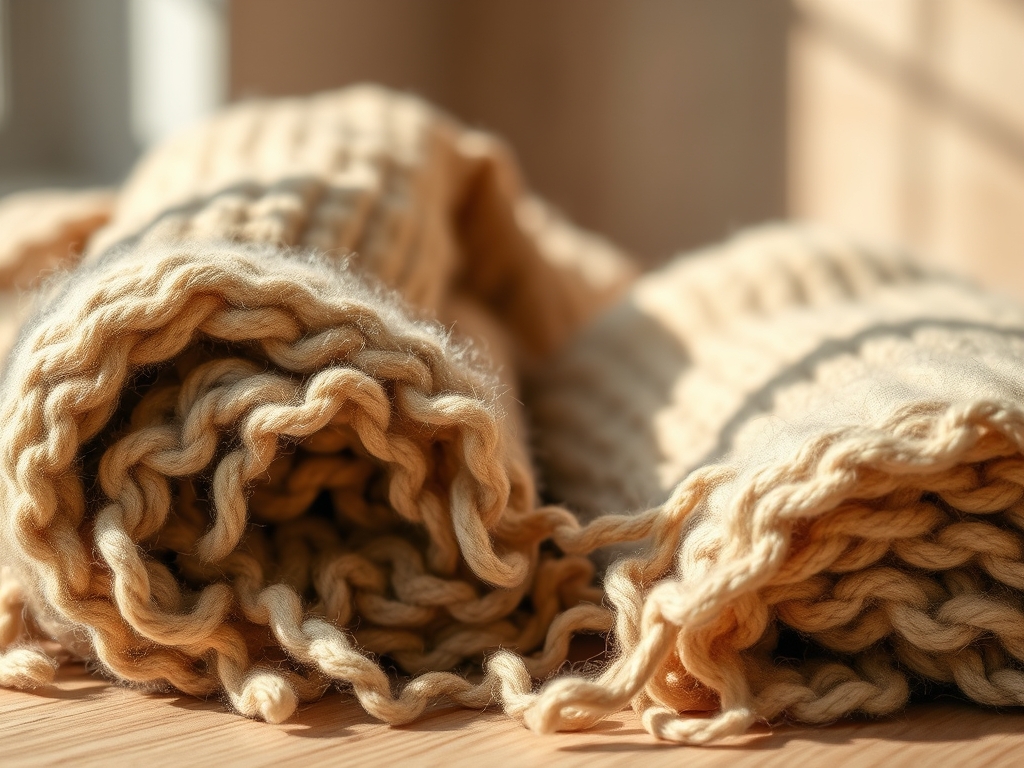
Imagine the sharp, crystalline air of a winter midnight pressing against your windowpane while you are swaddled in a fortress of sheer architectural warmth. We are not just talking about a basic coverlet; we are diving deep into the structural engineering of Handmade Wool Blankets. When you run your hands over unspun roving, you are feeling the literal tensile strength of thousands of microscopic scales interlocking to create a thermal barrier. It is tactile magic. The weight is substantial, the texture is porous, and the satisfaction of creating a functional masterpiece with nothing but your own two hands is a total dopamine hit. We are going to master the physics of the oversized stitch, focusing on how fiber density dictates the drape and longevity of your work. Grab a massive mug of coffee because we are about to transform raw, high-micron wool into a structural marvel that defies the coldest nights. This is about more than just craft; it is about manipulating organic polymers into a cozy sanctuary.
THE STUDIO KIT
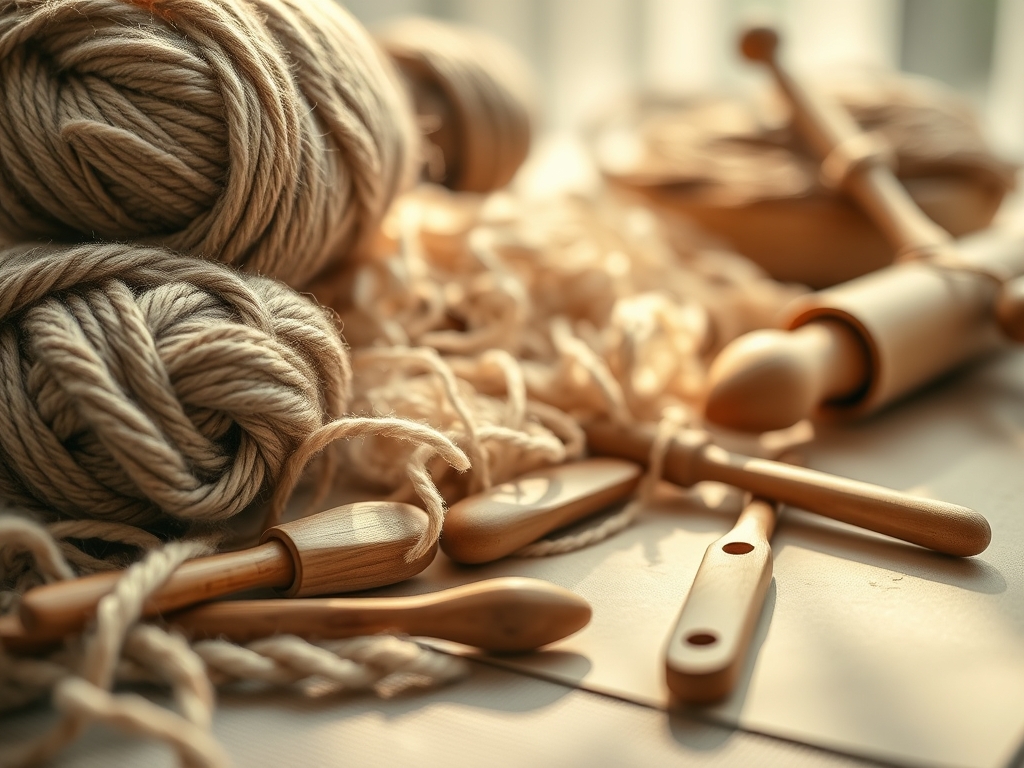
To build professional grade Handmade Wool Blankets, you need to understand your inventory like a materials scientist. Your primary medium is Merino wool roving, specifically measured in microns. For a chunky knit, you want a micron count between 21 and 25; anything higher feels like a scouring pad, and anything lower lacks the structural integrity to survive a wash cycle. You will also need a rotary cutter for clean edge finishes and a soft tape measure to monitor your gauge consistency. If you are not arm knitting, you will require size 50 (25mm) circular needles to manage the massive weight without straining your wrists.
Material Substitutions: If you are allergic to lanolin or seeking a vegan alternative, look for chenille polyester or tube yarn. While these lack the natural capillary action of wool (which wicks moisture away from the body), they offer incredible durability and are much easier to sanitize. For a hybrid approach, a wool-acrylic blend provides the thermal regulation of protein fibers with the "memory" of synthetic polymers, preventing the blanket from stretching out of shape over time.
THE TEMPO
The "Maker's Rhythm" is a state of flow where your muscle memory takes over the ergonomic movements of the knit. For a standard throw, expect a total production time of about four to six hours. The first hour is the "Foundation Phase," where you establish your tension. If you start too tight, the blanket will be stiff as a board; too loose, and it will look like a fishing net. The middle three hours are the "Steady State," where you maintain a consistent ply alignment. The final hour is dedicated to the "Finishing Phase," which includes weaving in ends and burnishing the surface to reduce future pilling. Respect the tempo; rushing the cast-off leads to uneven edges that ruin the geometric symmetry of the piece.
THE CORE METHOD
1. The Foundation Chain
Start by creating a slip knot that fits comfortably around your forearm or needle. This is the anchor for your entire project. Ensure the "tail" is at least three times the width of your desired blanket to avoid running out of material during the final bind-off.
Mastery Tip: This step relies on surface tension. If you pull the loop too tight, you constrict the air pockets within the wool fibers, which are essential for heat retention. Keep the loops uniform by using a caliper or a simple cardboard spacer to ensure every stitch is exactly four inches wide.
2. The First Row Transfer
Pull the working yarn through your foundation loops to create the second row. You are essentially creating a series of interlocking bights. This is where you set the gauge, which determines the final density of the textile.
Mastery Tip: Pay attention to the grain direction of the roving. Wool has a natural "twist." If you twist the yarn against its natural orientation during the transfer, you introduce internal torque that will cause the blanket to curl at the corners once it is laid flat.
3. Managing the Mid-Skein Join
When you reach the end of one ball of wool, do not just tie a knot. Use a technique called "felt joining." Pull the fibers of both ends apart, overlap them, and rub them vigorously between your palms with a drop of water.
Mastery Tip: This utilizes friction and moisture to agitate the scales on the wool fibers, causing them to lock together permanently. This creates a seamless transition that maintains the tensile strength of the yarn without the bulk of a knot.
4. Maintaining Vertical Alignment
As you progress, periodically lay the blanket flat on a hard surface. Check that the "V" shapes of the stitches are stacking perfectly vertically. Use a bone folder or your fingers to smooth out any bunching in the fibers.
Mastery Tip: This is about structural integrity. If the stitches begin to slant, it indicates uneven tension between your left and right hands. Correcting this early prevents the finished blanket from becoming a trapezoid instead of a rectangle.
5. The Decorative Edge
For the side borders, utilize a "Slipped Stitch" technique. Instead of knitting the last stitch of every row, simply move it to the other needle. Knit it only when you return to it on the next pass.
Mastery Tip: This creates a braided edge that mimics the look of a selvage in woven fabric. It reinforces the perimeter against mechanical wear and tear, ensuring the edges do not fray or "bloom" excessively over months of use.
6. The Binding Off
To finish, pass the first two loops of the final row over each other, then pull the working yarn through the remaining loop. This locks the entire matrix of stitches in place.
Mastery Tip: Ensure the bind-off is slightly looser than the rest of the blanket. Because the top edge is subject to the most longitudinal stress when the blanket is pulled up to your chin, a loose bind-off allows the fibers to expand without snapping.
7. The Final Burnish
Once the blanket is bound, use a small awl or a dull needle to tuck any loose tufts back into the core of the stitches. Lightly steam the blanket with a garment steamer to set the fibers.
Mastery Tip: Steaming introduces controlled humidity that allows the wool fibers to relax into their new geometry. This process, known as blocking, ensures the blanket retains its dimensions and prevents the "recoil" effect common in raw wool projects.
THE TECHNICAL LEDGER
Maintenance & Longevity: Never machine wash a chunky wool blanket. The agitation will cause the fibers to felt into a solid, inflexible mass. Instead, spot clean with cold water and a pH-neutral detergent. To refresh the loft, take the blanket outside and shake it vigorously to re-introduce air into the fiber matrix.
Material Variations:
- Sustainable: Look for "RWS" (Responsible Wool Standard) certified roving.
- Recycled: Use "T-shirt yarn" made from reclaimed cotton jersey for a heavy, industrial feel.
- Premium: Cashmere-Merino blends offer the highest thermal-to-weight ratio.
The Correction:
- The Gap: If you see a hole, you dropped a stitch. Use a crochet hook to "ladder" the stitch back up to the current row.
- The Shed: Excessive pilling occurs when fibers are too short. Use a fabric shaver or a sharp rotary cutter to trim the fuzz.
- The Stretch: If the blanket becomes too long, it is "growing" due to gravity. Store it folded, never hanging.
Studio Organization: Store your wool in airtight, UV-protected bins. Wool is a protein fiber, making it a target for moths. Include cedar blocks or lavender sachets to act as natural repellents while maintaining the porous quality of the roving.
THE FINAL REVEAL
Look at that masterpiece! You have successfully navigated the complex physics of fiber art to create a high-performance piece of home decor. Your Handmade Wool Blankets are not just cozy; they are a testament to geometric precision and material science. The way the light hits the oversized loops creates a dramatic shadow play that adds depth to any room. You have mastered the tension, conquered the join, and finished with a professional edge. Now, dim the lights, grab a book, and let that thermal mass do its job. You earned this level of luxury.
STUDIO QUESTIONS
Why is my wool blanket shedding so much?
Shedding occurs when short staple fibers break free from the roving. This is common with unspun wool. To minimize this, "pre-felt" the yarn by lightly steaming it or choosing a higher-twist roving to increase fiber cohesion.
Can I use acrylic yarn for this project?
Yes, but the physics change. Acrylic is a plastic polymer and lacks the breathability of wool. It is more durable and machine-washable, but it will not provide the same "dry heat" or moisture-wicking properties as natural protein fibers.
How much wool do I need for a queen size?
For a standard queen-size throw (60×80 inches), you will need approximately 8 to 10 pounds of wool roving. Always calculate your gauge first, as a tighter stitch density will require significantly more material to cover the same surface area.
How do I fix a dropped stitch in chunky knit?
Because the stitches are so large, you can simply reach through the loop below and pull the "bridge" yarn through to create a new loop. Secure it with a locking stitch marker until you reach that point in your next row.