
Close your eyes and imagine the scent of freshly shaved cedar mingling with the sharp, metallic tang of a jeweler's saw. You are standing in a space no larger than a walk-in closet, yet every square inch vibrates with potential. When we talk about Crafting for Tiny Homes, we are not just making trinkets; we are engineering survival through aesthetics. You feel the grit of the sandpaper against your palm and the cool, unyielding weight of a brass hinge. It is about the tactile satisfaction of a perfectly flush joint. In a van or a micro-apartment, your crafts must pull double duty as structural assets. We are looking for high tensile strength and low mass. Every gram matters when you are mobile. You are the master of this miniature domain, turning raw, porous wood and dense textiles into functional art that defies the constraints of a small footprint. It is high-stakes making with a side of witty grit.
THE STUDIO KIT
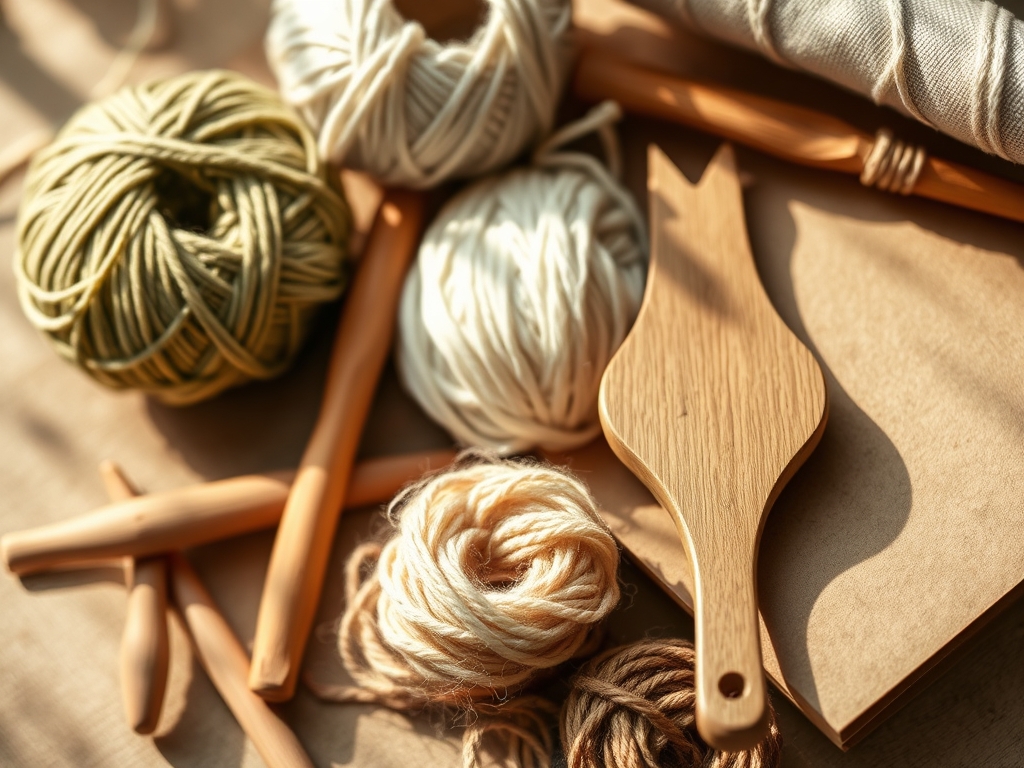
To master the art of the micro-build, your toolkit must be as lean as your living space. You will need a high-quality rotary cutter for precision fabric work and a set of digital calipers to measure tolerances down to the millimeter. A bone folder is essential for creating crisp, permanent creases in heavy-gauge paper or leather, while a spring-loaded awl allows you to puncture tough materials without the need for a bulky drill press. We focus on tools with high ergonomic efficiency to prevent fatigue in cramped quarters.
For materials, prioritize baltic birch plywood for its superior dimensional stability and high ply count. Use vegetable-tanned leather for straps; its collagen fibers are densely packed, offering incredible tensile strength. If you cannot find these, use Material Substitutions like high-density polyethylene (HDPE) sheets salvaged from containers or reclaimed marine-grade canvas. These alternatives offer excellent moisture resistance, which is vital in the high-humidity environment of a van.
THE TEMPO
The Maker's Rhythm in a tiny home is a dance of timing and spatial management. You cannot leave a project "out" to dry for three days; you simply do not have the floor real estate. We work in "The Rapid Phase" and "The Curing Phase." The Rapid Phase is the high-energy assembly where you are cutting and joining. This usually takes two to four hours of intense focus.
Then comes the Curing Phase, where adhesives or finishes set. Because of the limited airflow in small spaces, you must account for longer evaporation times for low-VOC finishes. Total project time usually spans forty-eight hours, but your active "hands-on" time is minimal. It is a rhythmic cycle of "burst and wait" that respects the physical limits of your environment.
THE CORE METHOD
1. The Magnetic Knife and Tool Rack
We start by routing out the back of a hardwood slat. You want to get as close to the front surface as possible without breaking through. This utilizes the inverse square law of magnetism; every millimeter of wood between the magnet and the tool significantly weakens the pull. Insert neodymium magnets and seal with epoxy.
Mastery Tip: Use a caliper to ensure your remaining wood wall is exactly 2mm thick. This thickness maintains structural integrity while maximizing magnetic flux leakage for a secure hold.
2. The Leather Sling Book Cradle
Vertical storage is king. Cut two strips of 8-ounce leather. Use a burnishing tool and beeswax on the edges to seal the fibers. This prevents moisture from entering the porous edge, which can lead to fiber degradation over time. Bolt these directly into your wall studs using stainless steel washers.
Mastery Tip: Pre-stretch your leather by hanging a weight from it overnight. This accounts for the plastic deformation of the hide, ensuring your cradle does not sag unevenly once installed.
3. Nested Baltic Birch Organizers
Using a jeweler's saw, cut interlocking tabs for small boxes. This creates a "finger joint" which increases the surface area for glue bonding. More surface area equals a stronger chemical bond via capillary action, drawing the adhesive deep into the wood grain.
Mastery Tip: Apply glue with a fine-tip syringe. This prevents "squeeze-out," which is difficult to sand in tight interior corners and can interfere with the final wood stain absorption.
4. The Paracord Ceiling Net
Measure the tension required to keep the net taut. We use a cobra weave for the border to increase the gauge and prevent snapping under load. Paracord is made of nylon, which has a high elastic modulus, meaning it can stretch significantly before failing.
Mastery Tip: Singe the ends of the cord with a butane torch to fuse the inner core to the outer sheath. This prevents "fraying creep," where the internal strands retreat into the sleeve.
5. Copper Pipe Hanging Garden
Copper is naturally antimicrobial, making it perfect for kitchen-adjacent crafts. Use a pipe cutter for clean, burr-free edges. Suspend the pipes using high-tensile steel wire. The weight distribution relies on static equilibrium; ensure your anchor points are perfectly leveled to prevent sliding.
Mastery Tip: Use a deburring tool on the inside of the pipe. Smooth surfaces reduce the risk of stress fractures forming at the ends of the tube under the weight of heavy ceramic pots.
6. The Fold-Down Work Desk
This project requires heavy-duty piano hinges. The load is distributed across the entire length of the hinge, reducing the shear stress on individual screws. Use a countersink bit so the screw heads sit flush, allowing the desk to close perfectly flat against the wall.
Mastery Tip: Calculate the lever arm of the desk. The further out you put weight, the more torque you apply to the wall anchors. Keep your heaviest tasks closest to the hinge line.
THE TECHNICAL LEDGER
Maintenance & Longevity: Every six months, inspect your leather for dryness and apply a lanolin-based conditioner. For wood items, a quick buff with carnauba wax restores the hydrophobic barrier, protecting the grain from the "sweat" or condensation common in van life.
Material Variations: For a premium feel, swap birch for black walnut; it has a higher Janka hardness rating. For sustainability, use cork fabric, which is harvested without killing the tree and possesses natural thermal insulation properties.
The Correction:
- The Gap: If a joint has a gap, mix fine sawdust with wood glue to create a structural filler that matches the grain.
- The Slump: If a fabric sling sags, add a "tensioner" bead or a sliding knot to recalibrate the tautness.
- The Strip: If a screw hole strips in thin plywood, glue a toothpick into the hole and re-drill to create fresh "bite" for the threads.
Studio Organization: Store your materials in clear polypropylene bins under your seating. Label them by material density. Keep your "active" tools in a roll-up canvas wrap to prevent them from clanking and dulling their edges during transit.
THE FINAL REVEAL
Look at what you have built! It is a symphony of physics and grit. Your tiny home is no longer just a place where you sleep; it is a high-functioning laboratory of your own design. The leather is taut, the wood is smooth and burnished, and the magnets click with a satisfying, metallic "thwack." You have successfully navigated the constraints of small-scale engineering. These pieces are not just "cute"; they are rugged, calculated, and perfectly fitted to your life on the move. You should feel that "maker's high" radiating through you. You did not just craft; you optimized.
STUDIO QUESTIONS
What is the best wood for tiny home crafts?
Baltic Birch is superior due to its high ply count and dimensional stability. It resists warping caused by the extreme temperature fluctuations often found in vans and mobile homes, ensuring your joints stay tight and flush over time.
How do I prevent crafts from rattling while driving?
Use silicone bumpers or felt lining on the contact points of your projects. This dampens vibrations and absorbs the kinetic energy of a moving vehicle, preventing the "clatter" that can lead to material fatigue and hardware loosening.
Can I use hot glue for permanent van fixtures?
Avoid hot glue for structural elements. It has a low melting point and can soften in a hot van, leading to bond failure. Use two-part epoxies or polyurethane adhesives which offer much higher thermal resistance and chemical bonding strength.
How do I maximize storage for my crafting supplies?
Utilize the "dead space" behind cabinet toe-kicks or inside hollow furniture. Store heavy items like metal hardware low to maintain a low center of gravity in the vehicle, and use vertical magnetic strips for frequently used small tools.