Listen to that. It is the sound of a metal nib biting into the tooth of high quality cotton paper. It is a crisp, rhythmic scratch that signals the start of your Daily Sketchbook Practice. You are not just doodling; you are engaging in a tactile negotiation between liquid carbon and cellulose fibers. When you press that pen down, you are testing the tensile strength of the page while managing the capillary action of the ink. It feels like magic, but it is pure physics. We are going to transform your creative block into a structured flow state by mastering the way pigment interacts with a porous surface. Forget the fear of the blank page. We are treating your sketchbook like a laboratory where every line is an experiment in fluid dynamics and hand-eye synchronization. Grab your coffee and clear your desk; we are about to dive into the technical beauty of the ink-stained life.
THE STUDIO KIT
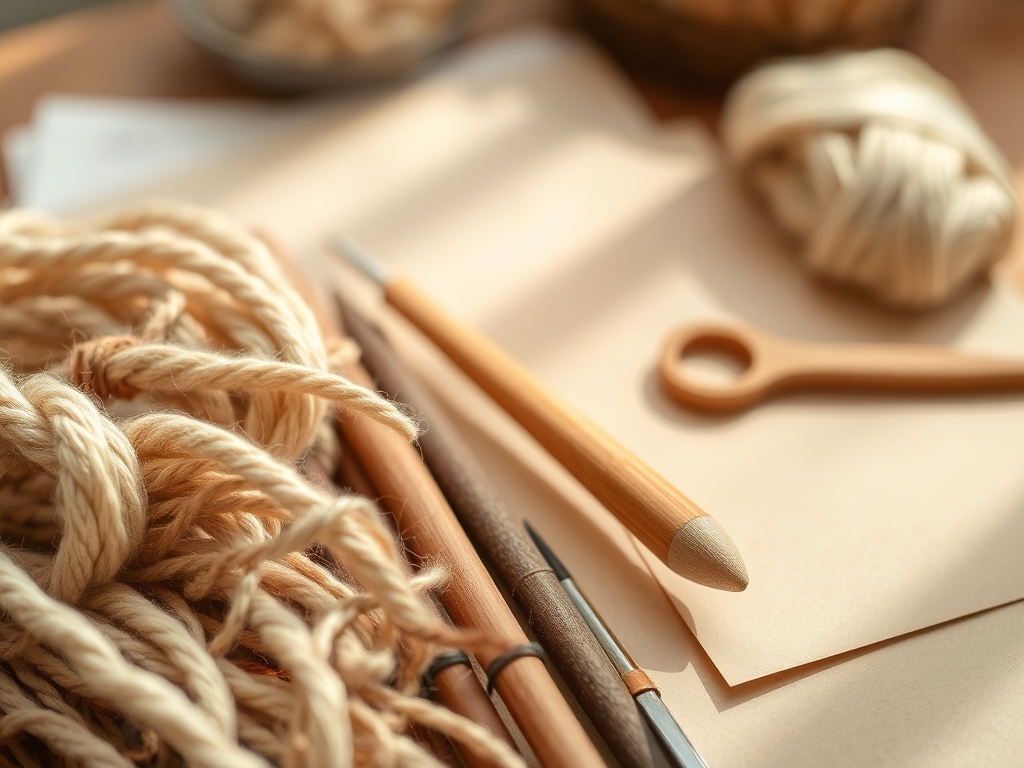
To master a Daily Sketchbook Practice, you need a kit that respects the **viscosity** of your medium. Your primary tool should be a technical fineliner or a fountain pen with a stainless steel nib. Unlike a ballpoint, these tools rely on gravity and surface tension to deliver a consistent flow of pigment. You want a sketchbook with at least 140gsm weight to prevent **ghosting**, which occurs when the ink saturates the paper fibers to the point of transparency on the reverse side. A **bone folder** is also essential for crisping your page folds, ensuring the book lays flat for ergonomic drawing angles.
Material Substitutions: If you lack a professional technical pen, a high-pigment gel pen works, though the dry time increases significantly. If your paper is too thin, use a sheet of glassine or a plastic backing board behind your active page to prevent ink bleed from ruining the subsequent sheets in your stack.
THE TEMPO
The "Maker's Rhythm" is a three-phase cycle that prevents cognitive fatigue. Phase one is the Activation Phase (5 minutes), where you perform rapid-fire strokes to warm up the small muscles in your hand. Phase two is the Deep Flow Phase (15 to 20 minutes), where you execute the primary prompt with focus on line weight and geometric precision. Finally, the Reflection Phase (5 minutes) involves labeling your work and cleaning your tools. Total time is under thirty minutes, making it a sustainable habit that fits into a professional schedule without sacrificing the technical quality of your output.
THE CORE METHOD
1. The Topographic Map
Begin by drawing a single, continuous undulating line that never intersects itself. This exercise focuses on spatial awareness and steady hand pressure. You are mapping the "terrain" of the page, much like a surveyor using a caliper to measure minute distances.
Mastery Tip: This prompt teaches you to manage the friction coefficient between the nib and the paper. If you move too fast, the ink may skip; move too slow, and you create a "bleed spot" where the paper absorbs excess moisture.
2. The Hatching Gradient
Create a series of one-inch squares and fill them with parallel lines. Start with wide gaps and gradually decrease the distance between lines until the square is nearly solid black. This is a masterclass in linear density.
Mastery Tip: Use your shoulder, not just your wrist. By pivoting from the larger joint, you maintain a consistent axial alignment, which ensures your lines stay perfectly parallel rather than fanning out.
3. The Micro-Botany Study
Find a leaf or a small organic object. Instead of drawing the whole shape, focus exclusively on the vein architecture. Use an ultra-fine 0.05mm nib to capture the structural ribs that provide the plant with its structural integrity.
Mastery Tip: Observe how the ink follows the "grain" of your sketch. If you are using cold-press paper, the texture will break your line up; use this to simulate the organic irregularities of the specimen.
4. Negative Space Silhouettes
Identify a complex object like a pair of scissors or a jeweler's saw. Instead of drawing the object, ink in everything around it. This flips your brain's processing from object recognition to spatial volume.
Mastery Tip: This requires a high volume of ink. Watch for pooling. If the ink collects in a puddle, the paper fibers may swell and warp, a process known as "cockling."
5. The Isometric Grid
Draw a series of perfect cubes using only 30-degree angles. This prompt is about mathematical perspective and requires a steady, slow stroke to ensure every vertex meets perfectly.
Mastery Tip: Use a metal ruler or a rotary cutter guide to check your angles. This builds the "muscle memory" needed for architectural rendering and technical illustration.
6. Controlled Stippling
Build a sphere using only dots. The closer the dots, the darker the shadow. This exercise is a brutal test of patience and precision, mimicking the way a printer uses halftone dots to create images.
Mastery Tip: Do not "stab" the paper. A gentle, vertical tap preserves the integrity of the nib. Forceful stippling can splay the tines of a fountain pen or collapse the felt tip of a fineliner.
7. The Blind Contour
Look at your non-dominant hand and draw it without looking at the paper. This forces a direct neural link between your eyes and your motor cortex, bypassing the "ego" that wants the drawing to look "good."
Mastery Tip: This exercise highlights the tactile feedback of your pen. Even without looking, you can feel the vibration of the nib as it travels over the paper's surface.
8. Textural Swatching
Divide a page into six sections. In each, try to mimic a different material: weathered wood, polished chrome, woven linen, or rusted steel. This requires varying your stroke velocity and ink load.
Mastery Tip: To achieve a "chrome" look, leave stark white gaps. This utilizes the reflectance of the paper to simulate a high-gloss finish.
9. The Ribbon Twist
Draw a long, flowing ribbon that twists and turns in 3D space. Use cross-contour lines to define the curves. This prompt focuses on form and fluid dynamics, making a flat surface appear three-dimensional.
Mastery Tip: Pay attention to the overlap points. By slightly thickening the line where the ribbon passes "under" itself, you create a visual weight that suggests depth and gravity.
THE TECHNICAL LEDGER
Maintenance & Longevity: Always store your pens horizontally. Storing them nib-up causes the ink to drain away from the feed, leading to clogs; storing them nib-down can cause leakage. For your sketchbook, keep it in a cool, dry place. Humidity is the enemy of paper, as it weakens the hydrogen bonds between cellulose fibers, leading to a "fuzzy" line quality.
Material Variations: For a sustainable approach, look for sketchbooks made from bamboo or hemp fibers. These materials often have a higher silica content, which provides a unique "snap" to the pen stroke. Premium users might opt for 100% cotton rag paper, which offers the highest archival stability and acid-free properties.
The Correction:
- The Smudge: If you smear wet ink, do not wipe it. Use a precision craft knife to gently scrape the dried top layer of paper fibers away once it is fully set.
- The Clog: If a pen stops flowing, do not shake it. Draw a series of circles on a damp paper towel to re-establish the osmotic pressure in the feed.
- The Bleed: If ink is feathering, your paper is too porous. Apply a thin layer of clear gesso to the page to seal the surface before continuing.
Studio Organization: Use a dedicated shelf for your "Daily Sketchbook Practice" archives. Store them vertically with a small gap between books to allow for airflow, which prevents the growth of mold in humid climates.
THE FINAL REVEAL
There is nothing quite like flipping through a finished sketchbook and seeing the evolution of your line work. What started as a few shaky strokes has become a dense, technical record of your creative growth. You have mastered the viscosity of your ink and the porosity of your paper. Your Daily Sketchbook Practice is no longer just a hobby; it is a high-level technical discipline. You have built a library of textures, shapes, and shadows that belong entirely to you. Now, close the book, cap your pen, and feel that surge of accomplishment. You are a maker, and your laboratory is always open.
STUDIO QUESTIONS
How do I stop my ink from feathering?
Feathering occurs when ink spreads along paper fibers. To fix this, switch to a sized paper or a higher-quality "bleed-proof" sketchbook. You can also use a faster-drying ink with a higher alcohol content to minimize absorption time.
What is the best pen for beginners?
Start with a 0.5mm pigment liner. These use archival ink that is waterproof once dry, allowing you to layer other mediums. They feature a durable plastic nib that handles inconsistent hand pressure better than a delicate fountain pen or dip pen.
Why does my hand cramp during practice?
Cramping is usually a result of "the death grip." Lighten your pressure and ensure your pen has a sufficient ergonomic diameter. If the pen is too thin, wrap it in grip tape to increase the surface area for your fingers.
How many pages should I do daily?
Consistency beats volume. Commit to one single page or even a half-page. The goal is to maintain the neural pathways associated with the "Maker's Rhythm" without triggering the mental fatigue that leads to abandoning the habit entirely.