
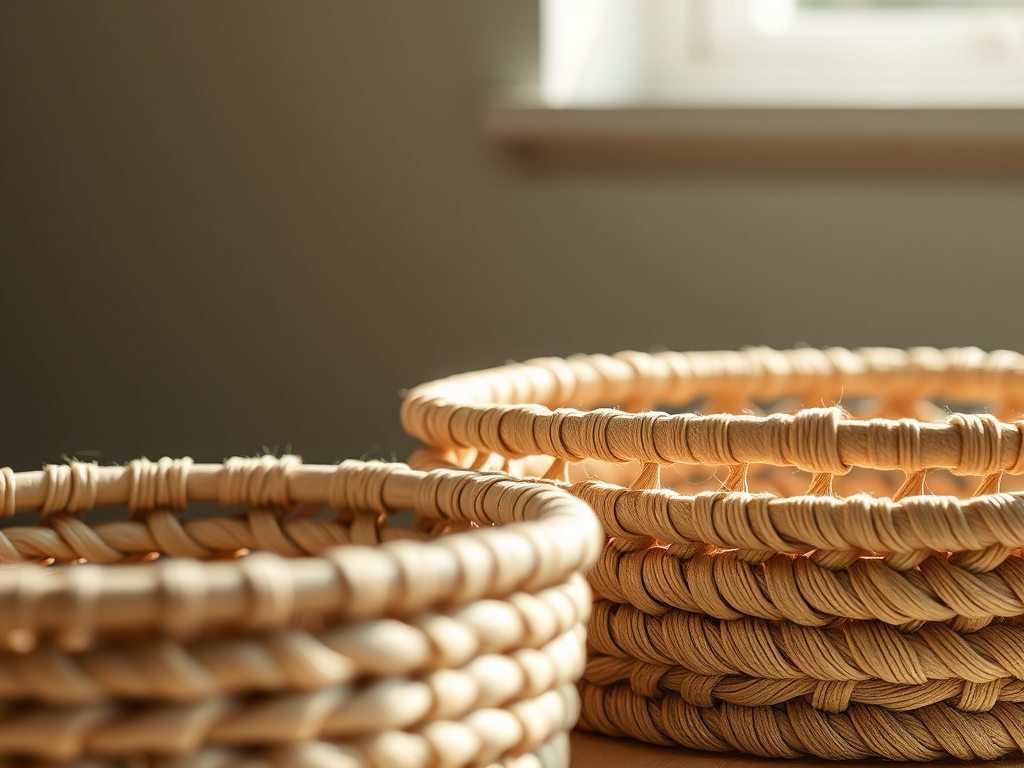
Close your eyes and listen to the sound of dry seagrass sliding against itself; it is a rhythmic, hushed rasp that signals the birth of something structural. When you pick up a bundle of high-quality rattan or willow, you are not just grabbing "craft supplies." You are engaging with the raw tensile strength of plant fibers that have been dried to a specific moisture content to ensure they remain pliable without snapping. Creating Handmade Storage Baskets is an exercise in engineering where you are the architect of tension and friction. You can feel the tactile resistance as you pull a weaver over a stationary stake, creating a locking mechanism that relies entirely on the structural integrity of the weave rather than adhesives. It is messy, it is earthy, and it smells like a summer field after a rainstorm. We are about to turn these unruly, porous stalks into sophisticated vessels that can hold everything from heavy firewood to delicate linens. Grab your spray bottle and let's get into the physics of the fold.
THE STUDIO KIT
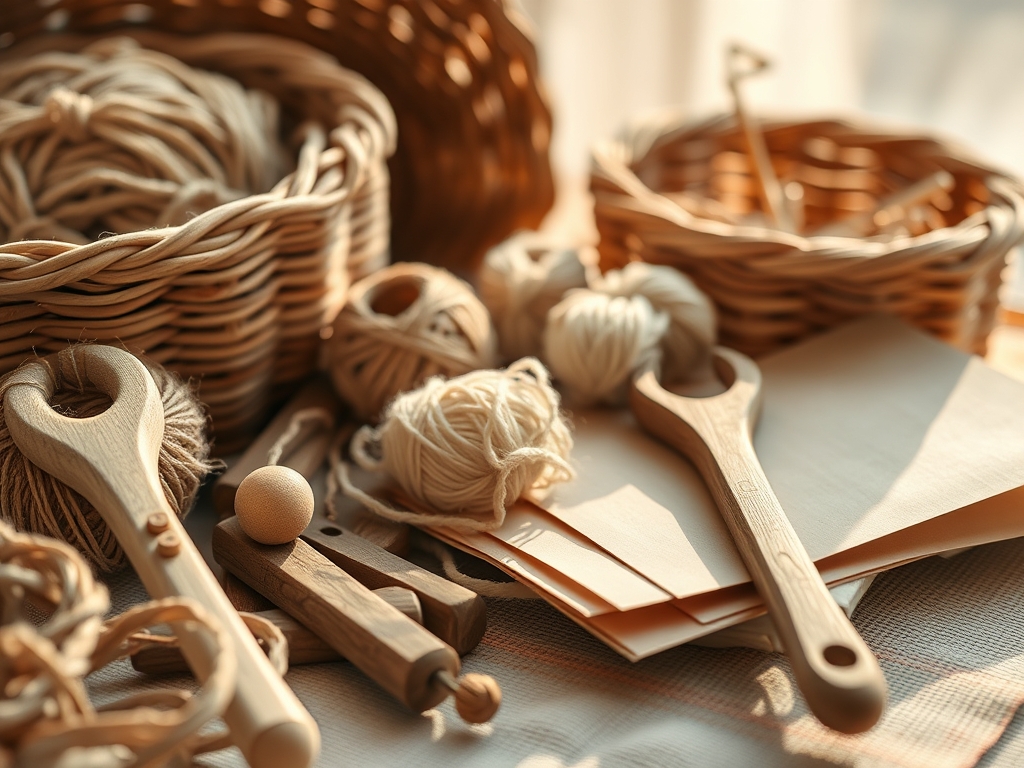
To master the art of the weave, you need more than just your hands. Professional basketry requires tools that manage the gauge and moisture of your materials. You will need a pair of high-carbon steel heavy-duty shears for clean cuts that do not crush the delicate vascular bundles of the cane. A straight awl is non-negotiable for creating space between tight rows to tuck in your ends. I also recommend a bone folder to help crisp up the edges of flat-reed projects and a set of spring clamps to hold your tension while you reposition your grip.
For the materials, we are looking at round reed (measured in millimeters for precision), flat-oval reed for structural stakes, and seagrass cord for texture. If you cannot find traditional reed, consider "Material Substitutions" like heavy-gauge cotton clothesline for a coiled look or even recycled copper wire for a modern, industrial twist. Just remember that different materials have different elasticity constants; what works for a flexible vine will not work for a rigid metal.
THE TEMPO
The "Maker's Rhythm" is a real psychological state where your hands move faster than your internal monologue. For a standard medium-sized basket, expect a time investment of roughly six to eight hours. The first phase, the "Base Construction," takes about ninety minutes of intense focus to ensure the symmetry is perfect. The "Upsetting" phase, where you turn the weavers upward to form the walls, is a quick twenty-minute transition. The bulk of your time is spent in the "Continuous Weave," a meditative three-hour stretch. Finally, the "Rim and Lash" takes an hour of high-tension work. Do not rush the soaking process; your reed needs at least twenty minutes in lukewarm water to reach peak ductility.
THE CORE METHOD
1. The Radial Base Layout
Lay out your primary stakes in a cross pattern, ensuring they are centered with mathematical precision. Use a caliper to check that the distance between each spoke is identical. This is the foundation of your Handmade Storage Baskets.
Mastery Tip: This step relies on centripetal force as you begin your first rows. If your center is loose, the entire basket will wobble. Use a "twining" stitch here to lock the stakes in place immediately.
2. Upsetting the Stakes
Once your base reaches the desired diameter, soak the stakes again and bend them upward at a ninety-degree angle. This transition is known as "upsetting" and defines the volumetric capacity of your vessel.
Mastery Tip: Use a bone folder to score the reed slightly at the bend point. This redirects the internal stress of the fiber, allowing for a sharp corner without snapping the outer "skin" of the reed.
3. The Three-Rod Wale
This is the "power move" of weaving. Incorporate three separate weavers, alternating them over two stakes and under one. This creates a thick, rope-like band that provides incredible lateral stability.
Mastery Tip: The three-rod wale utilizes friction-fit engineering. The overlapping fibers create enough surface area contact to prevent the walls from collapsing under the weight of heavy storage items.
4. Continuous Plain Weave
Switch to a single weaver for the main body. Follow a simple over-under pattern, maintaining consistent tension. If you pull too tight, the basket will "waist" (narrow in the middle); too loose, and it will bulge.
Mastery Tip: Observe the grain direction. Always weave with the "smooth" side of the reed facing out to minimize hygroscopic expansion, which can cause the basket to warp if it gets damp later.
5. Inserting the Handle Core
For baskets intended for heavy lifting, the handle must be an integral part of the structure, not an afterthought. Slide a heavy-gauge "D" handle or a thick piece of steamed oak down into the woven walls, reaching at least halfway to the base.
Mastery Tip: This distributes the load-bearing weight across the entire vertical surface area of the basket rather than putting all the stress on the top rim.
6. The Rim and Lash
Fold the remaining stake ends over a thick "rim" reed and secure them with a "lasher" (a thin, flexible strip). Use a straight awl to guide the lasher through the tight gaps.
Mastery Tip: Use a "cross-stitch" lashing pattern to create triangulated reinforcement. In physics, triangles are the strongest shape, and this prevents the rim from shearing off during use.
7. The Burnish and Seal
Once the basket is dry, use a fine-grit sandpaper to remove any "hairs" or splinters. Apply a light coat of linseed oil or a clear wax to seal the fibers.
Mastery Tip: Sealing the wood reduces the capillary action of the fibers, meaning the basket won't absorb atmospheric moisture and become a breeding ground for mold in humid rooms like bathrooms.
THE TECHNICAL LEDGER
Maintenance & Longevity: To keep your baskets in peak condition, vacuum them with a brush attachment once a month. Every six months, give them a light misting of water to prevent the fibers from becoming too brittle; think of it as "rehydrating" the cellulose structure.
Material Variations:
- Sustainable: Use locally harvested willow or invasive vines like honeysuckle.
- Recycled: Use felted wool strips or discarded climbing rope for high abrasion resistance.
- Premium: Incorporate smoked reindeer leather or copper wire for a luxury finish.
The Correction:
- The Gap: If you see daylight between rows, your tension is too low. Fix: Use a "packing tool" or a flat-head screwdriver to tap the rows down firmly.
- The Snap: A stake breaks during upsetting. Fix: Use your awl to "surgicaly" remove the broken stake and slide a new, well-soaked replacement into the weave.
- The Lean: The basket is tilting to one side. Fix: This is caused by uneven ply pressure. Dampen the basket and "force-mold" it into symmetry, then clamp it in place until dry.
Studio Organization: Store your raw reed in a cool, dry place away from direct UV light, which breaks down lignin and causes fading. Keep your tools in a dedicated roll-up pouch to protect the sharpened edges of your shears and awls.
THE FINAL REVEAL
Look at that! You have officially transitioned from a pile of sticks to a functional piece of art. Your Handmade Storage Baskets are now ready to tackle the chaos of your living room or the clutter of your pantry. There is a profound satisfaction in knowing that the structural integrity of that vessel is a result of your own hand-applied tension. It is sturdy, it is beautiful, and it is a testament to the fact that you understand the soul of your materials. Now go ahead, fill it up; it can handle the weight!
STUDIO QUESTIONS
What is the best material for beginner baskets?
Round reed is the gold standard for beginners due to its high flexibility and consistent gauge. It allows for easy manipulation and clear visualization of the over-under pattern without the complexity of managing flat-reed orientation or grain splintering.
How do I prevent my basket from molding?
Ensure the basket is 100 percent dry before use. Use a sealant like tung oil to decrease the porosity of the plant fibers. Avoid storing damp items, such as wet towels, in baskets made of untreated, highly absorbent natural materials.
Can I weave a basket without professional tools?
While specialized tools like an awl are helpful, you can substitute household items. Use a flat-head screwdriver for packing rows and sharp kitchen shears for cutting. However, professional tools provide better ergonomic support and prevent hand fatigue during long sessions.
Why does my reed keep snapping?
Snapping is usually a result of low moisture content. If the reed is too dry, the cellulose fibers lose their elasticity. Submerge your material in lukewarm water for at least twenty minutes, and keep a spray bottle handy to maintain ductility.