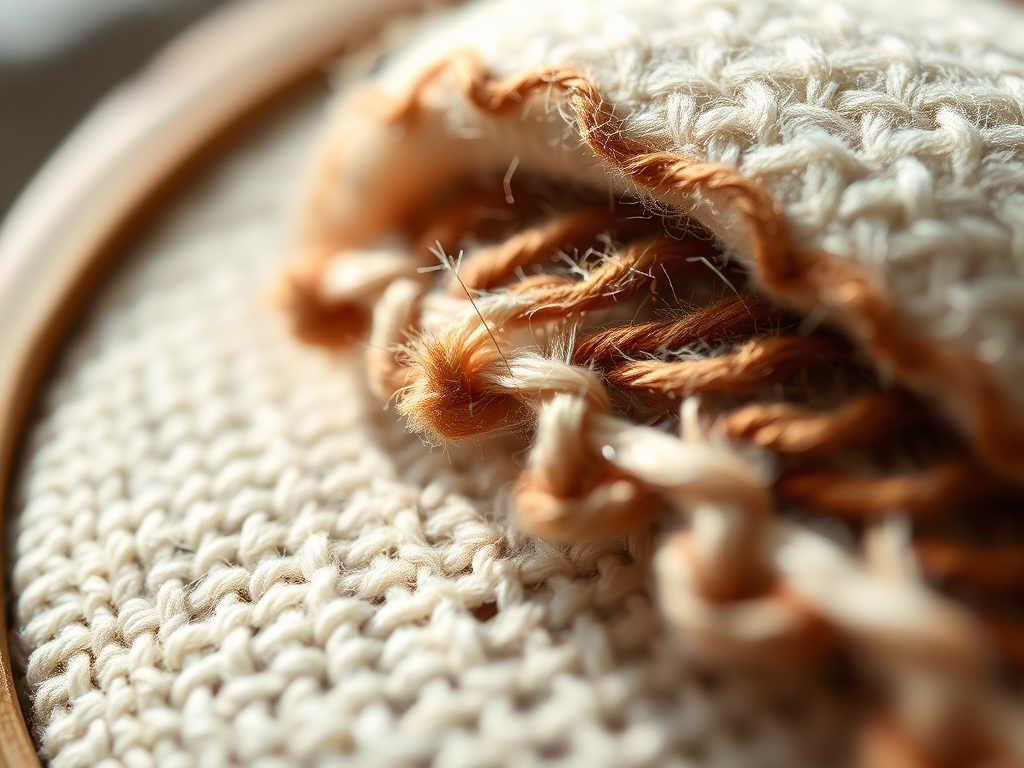
Close your eyes and listen to the snap of 100 percent cotton canvas being pulled taut across a polished beechwood frame. It is the sound of potential. When you begin your journey with Daily Embroidery Stitches, you are not just decorating fabric; you are engaging in a high stakes game of tension and structural integrity. The tactile resistance of the weave against your needle provides a sensory feedback loop that anchors your focus. Most people think embroidery is just about pretty colors, but we know better. It is about the physics of the fiber. You are manipulating the tensile strength of individual threads to create a stable, decorative lattice. Every time the needle pierces the surface, you are navigating the microscopic gaps between the warp and the weft. This process creates a rhythmic cadence that slows your heart rate while sharpening your spatial awareness. We are about to dive into seven small hoops that will transform your morning coffee break into a masterclass of precision and meditative calm. Grab your favorite thimble; we have some serious physics to discuss.
THE STUDIO KIT
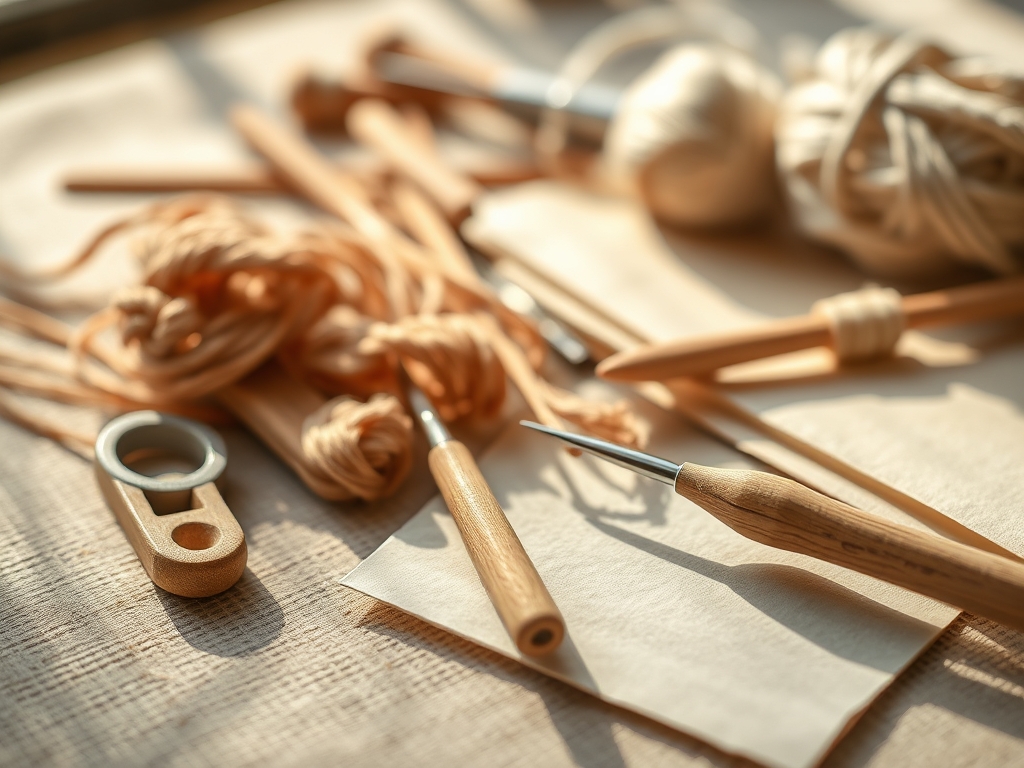
To master Daily Embroidery Stitches, your kit must be curated with technical precision. Start with seven four inch embroidery hoops. I prefer high density beechwood because the grain is tighter than bamboo, which prevents the inner ring from warping under high tension. You will need a variety of needles, specifically size 5 to 10 embroidery needles. The tapered point of a high quality needle reduces the friction coefficient as it passes through the fabric, preventing "puckering" or structural fatigue in the textile.
For your base, select a medium weight linen or a high thread count cotton. Linen is particularly satisfying because it is highly porous, allowing for easier needle passage while maintaining excellent dimensional stability. Your thread choice is equally vital. Six strand cotton floss is the industry standard because of its versatility; you can strip the ply to adjust the line weight of your work. Use a pair of fine tipped embroidery scissors with a high Rockwell hardness rating to ensure clean, surgical snips that do not fray the fiber ends.
Material Substitutions: If you cannot find linen, a heavy weight muslin works beautifully as a sustainable alternative. If you lack a professional needle threader, a simple loop of thin gauge copper wire can serve as a makeshift tool to pull stubborn threads through the eye of a needle.
THE TEMPO
The Maker's Rhythm is not about speed; it is about the consistent velocity of your needle. Each of the seven hoops is designed to be a micro project. You should allocate approximately twenty minutes per day to your stitches. The first five minutes are the "Calibration Phase," where you prep your hoop and find the grain of the fabric. The middle ten minutes are the "Flow State," where the repetitive motion of the needle creates a meditative resonance. The final five minutes are the "Securing Phase," where you tie off your threads and inspect the structural integrity of the back. By maintaining this tempo, you prevent hand fatigue and ensure that your stitch density remains uniform across all seven pieces.
THE CORE METHOD
1. Calibrating the Hoop Tension
Begin by loosening the brass screw on your hoop. Lay your fabric over the inner ring and press the outer ring down firmly. As you tighten the screw, pull the fabric edges outward. The goal is to achieve a "drum tight" surface. If you tap the center of the fabric, it should produce a clear, percussive sound. This indicates that the surface tension is high enough to support the weight of your stitches without sagging.
Mastery Tip: The physics of displacement means that every stitch adds weight. If your initial tension is too low, the cumulative weight of the thread will cause the fabric to dip, leading to uneven stitch lengths and distorted patterns.
2. Mapping the Geometric Grid
Use a water soluble marking pen to draft your design. For daily practice, I recommend a simple geometric grid or a series of concentric circles. This provides a visual roadmap that helps you maintain a consistent gauge. Use a ruler or calipers to ensure your marks are exactly three millimeters apart. Precision at this stage prevents the "drift" that often occurs when stitching freehand.
Mastery Tip: Marking the fabric creates a temporary chemical bond. Ensure your fabric is dry before marking to prevent the ink from bleeding into the fibers via capillary action, which would blur your guide lines.
3. Executing the Foundation Running Stitch
The running stitch is the backbone of all embroidery. Pass your needle up through the fabric and back down at regular intervals. Focus on keeping the "negative space" between stitches equal to the length of the stitch itself. This creates a balanced visual weight. As you pull the thread, do not over tighten; you want the thread to sit flush against the surface without compressing the fabric fibers.
Mastery Tip: To maintain structural integrity, always start your stitch from the center of the hoop and work outward. This distributes the pull of the thread evenly across the fabric grain, preventing the hoop from becoming lopsided.
4. Layering the Satin Stitch for Density
To create a solid block of color, use the satin stitch. These are long, parallel stitches laid closely together. The key is to keep the needle perfectly perpendicular to the fabric as it enters and exits. This ensures that the thread covers the fabric completely without leaving any "peek-a-boo" gaps. The result should be a smooth, reflective surface that mimics the sheen of silk.
Mastery Tip: The frictional resistance of the thread increases as you add more layers. If the fabric feels too tight, use a bone folder to gently burnish the back of the stitches, flattening them and creating more room for the needle.
5. Mastering the French Knot
The French knot adds three dimensional texture. Wrap the thread around the needle twice, then insert the needle back into the fabric almost exactly where it emerged. Hold the tail of the thread taut until the very last second. This creates a compact, spherical knot that stays anchored to the surface.
Mastery Tip: The secret to a perfect knot is torsional balance. If you wrap the thread too loosely, the knot will collapse. If you wrap it too tightly, you will create a "snag" that can tear the delicate fibers of your base fabric.
6. The Chain Stitch and Kinetic Curves
The chain stitch involves creating a loop and anchoring it with the next stitch. This is perfect for curved lines because the loops can pivot slightly to follow the contour of your design. It creates a heavy, braided appearance that adds significant tensile strength to the finished piece.
Mastery Tip: When stitching curves, reduce your stitch length. Smaller stitches allow for a higher resolution curve, preventing the "staircase effect" that occurs when long, straight stitches try to mimic a circle.
7. Finishing and Edge Burnishing
Once your seven hoops are complete, turn them over. Trim the excess fabric to about one inch from the hoop edge. Use a long running stitch to gather the fabric toward the center, then secure it. For a professional finish, you can glue a circle of felt over the back to protect the stitches from environmental degradation.
Mastery Tip: Use a wooden tool to burnish the edges of the hoop. This smooths out any micro splinters in the wood and ensures that the fabric remains locked in place for years to come.
THE TECHNICAL LEDGER
Maintenance & Longevity: Keep your hoops in a low humidity environment. High moisture can cause the wood to expand and contract, which compromises the tension of your Daily Embroidery Stitches. If the fabric becomes dusty, use a soft bristled brush or a compressed air canister to clean it.
Material Variations: For a premium experience, try using silk organza. It is transparent and requires an incredibly high level of precision because the back of your work is visible. For a recycled approach, old denim provides a rugged, high friction base that is excellent for practicing heavy duty stitches.
The Correction:
- The Pucker: If the fabric bunches, your tension is too high. Remove the stitches and re hoop the fabric.
- The Loop: If a stray loop appears on the front, use an awl to gently pull the thread from the back until it sits flush.
- The Snag: If your needle catches a thread in the weave, do not pull. Use a fine needle to gently tease the fibers back into alignment.
Studio Organization: Store your hoops in a dedicated shallow drawer or a pegboard. Avoid stacking them directly on top of each other, as the weight can crush the delicate knots and textured stitches of the hoop below.
THE FINAL REVEAL
Look at that! You have successfully navigated the complex world of fiber physics and geometric precision. Your seven small hoops are more than just a collection of Daily Embroidery Stitches; they are a testament to your focus and technical skill. The way the light catches the satin stitches and the shadows fall between the French knots creates a stunning visual depth. You have taken raw materials—wood, cotton, and steel—and transformed them into a meditative archive of your own making. Each hoop represents twenty minutes of pure, undistracted presence. Hang them on your wall as a cluster or gift them to friends who need a little piece of calm. You are officially a master of the hoop!
STUDIO QUESTIONS
How do I prevent my thread from tangling?
Keep your thread length under 18 inches to minimize frictional drag. Use a bit of beeswax to coat the thread; this smooths the microscopic scales on the cotton fiber and prevents the static buildup that causes knots.
What is the best way to hide knots?
Avoid knots entirely by using a "waste knot" or by weaving the tail of your thread through the back of existing stitches. This maintains a flat profile on the back of your work and prevents unsightly lumps.
Can I wash my finished embroidery?
Yes, but only by hand in cool water with a neutral pH soap. Avoid agitation, as this can cause the fibers to felt or the colors to bleed. Air dry the piece flat to maintain its dimensional stability.
Why is my hoop losing tension?
This is often due to atmospheric moisture or a loose screw. Ensure you are using a high quality hoop with a metal tightening nut. You can also wrap the inner ring with twill tape to provide extra grip.