Grab your favorite mug and clear some table space because we are diving into the visceral world of tactile physics. There is something profoundly grounding about the resistance of a heavy-gauge wire or the way a bone folder compresses cellulose fibers into a perfect, crisp crease. When life feels like a chaotic blur of digital noise, leaning into the mechanical resistance of physical matter provides an immediate sensory anchor. This is the art of Crafting for Emotional Balance. It is not just about making pretty things; it is about the rhythmic, repetitive motions that regulate our nervous systems through deliberate friction and tension. By focusing on the structural integrity of our materials, we shift from a state of mental rumination to one of creative flow. Whether you are feeling the cool weight of ceramic clay or the tensile snap of a silk thread, these projects are designed to harmonize your internal tempo with the physical laws of the universe. Let us get our hands dirty and find that elusive peace.
THE STUDIO KIT
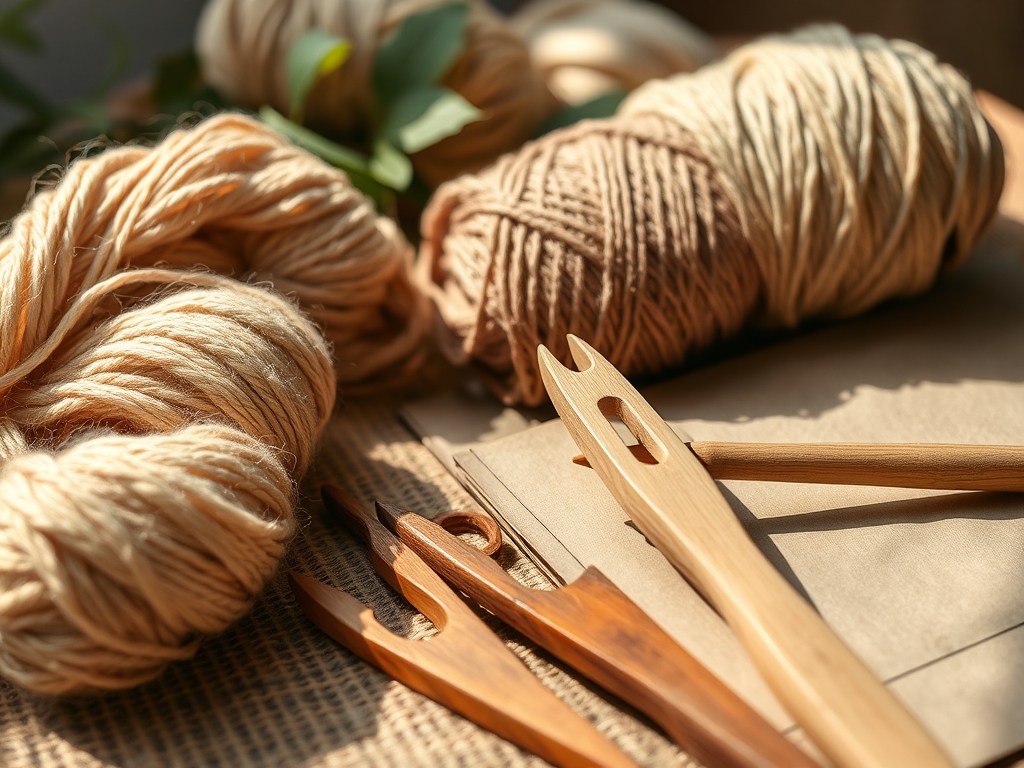
To master these seven rhythmic projects, you need a kit that respects the physics of your materials. High-quality tools reduce ergonomic strain, allowing you to focus on the rhythm rather than the struggle. You will need a precision rotary cutter with a tungsten carbide blade for clean, shear-force cuts and a teflon bone folder to manipulate paper without leaving a burnished shine. For textile work, keep a set of graduated steel awls to create pilot holes in dense fabrics or leather. If you are working with wire, flush-cut nippers are non-negotiable for achieving a flat profile at every junction.
Material Substitutions: If you cannot find high-ply linen thread, a waxed polyester cord offers similar tensile strength with better moisture resistance. Instead of professional bookbinding glue, a pH-neutral PVA adhesive works beautifully for paper-based projects. If a jeweler's saw is too intimidating, a high-tension coping saw can handle larger-scale wooden or plastic components. Remember, the goal is to match the tool's hardness to the material's density to prevent tool deflection or material tearing.
THE TEMPO
The "Maker's Rhythm" is a psychological state where the time spent on a task aligns with the natural properties of the medium. For these projects, the tempo is divided into three distinct phases. Phase one is the Preparation Cadence (20 to 30 minutes), where you measure, mark, and cut. This requires high cognitive focus and precision. Phase two is the Flow State Loop (1 to 3 hours), which involves the repetitive actions like stitching, weaving, or sanding. This is where the emotional balance occurs as your heart rate synchronizes with the repetitive motion. Finally, phase three is the Curing Interval (12 to 24 hours). This is the mandatory waiting period for adhesives to set or fibers to relax into their new shape. Respecting the curing interval is vital; rushing this phase compromises the structural integrity of your work.
THE CORE METHOD
1. The Japanese Stab Binding
This project focuses on the rhythmic piercing of paper stacks. Use your awl to create equidistant holes through a 40-page signature. The resistance of the paper against the steel point requires a steady, vertical pressure to ensure the exit hole aligns with the entry hole.
Mastery Tip: This process relies on compressive force. By clamping your pages tightly before drilling or piercing, you prevent the internal sheets from shifting, which ensures the "travel" of your needle remains perpendicular to the page edge.
2. Macrame Wall Hanging with Symmetrical Square Knots
Knitting and knotting are the gold standards for emotional regulation. As you pull the cotton cord, you are managing frictional resistance. Each knot must be tightened with the same amount of torque to ensure a uniform aesthetic.
Mastery Tip: Understanding load-bearing distribution is key here. If one knot is tighter than its neighbor, the entire piece will skew. Use a tension board to keep your anchor line taut, allowing the working cords to move freely.
3. Copper Wire Tree Sculpting
Twisting multiple strands of 24-gauge copper wire allows you to explore torsional strength. The act of twisting the trunk creates a helical structure that is incredibly strong yet flexible enough to be shaped into organic forms.
Mastery Tip: Copper undergoes work hardening. The more you manipulate and bend the wire, the more brittle it becomes at a molecular level. Plan your bends carefully to avoid snapping the wire from over-stressing the metal grain.
4. Leather Coin Pouch with Saddle Stitching
Using two needles and one thread, the saddle stitch is a rhythmic dance of hand-eye coordination. You pass the needles through a pre-punched hole in a figure-eight pattern, creating a seam that will not unravel even if a stitch breaks.
Mastery Tip: This technique utilizes mechanical interlock. By pulling both ends of the thread simultaneously, you create a balanced tension that seats the thread deep into the leather's grain, protecting it from surface abrasion.
5. Watercolor Layering for Depth
This is a lesson in capillary action. By controlling the ratio of pigment to water, you can create rhythmic washes that bleed into one another. The paper must be 300gsm cold-press to handle the saturation without warping.
Mastery Tip: Observe the evaporation rate. Applying a second wash while the first is "damp-matte" (not soaking, not dry) allows for a soft diffusion of color known as wet-on-wet technique, which is governed by the surface tension of the water.
6. Hand-Sanded Wooden Meditation Beads
Sanding is perhaps the most meditative craft. Starting with 80-grit sandpaper and moving up to 400-grit, you are physically smoothing the lignin fibers of the wood. The transition from rough to glass-like is incredibly satisfying.
Mastery Tip: Always sand in the direction of the longitudinal grain. Crossing the grain creates microscopic scratches that reflect light unevenly, ruining the final luster of the wood.
7. Geometric Paper Folding (Origami Tessellations)
Tessellations involve repeating a single fold pattern across a grid. This requires extreme precision and an understanding of crease memory. Once the paper is pre-creased, the entire sheet collapses into a complex 3D form.
Mastery Tip: Use the geometry of angles to your advantage. A bone folder allows you to create a "dead fold," which breaks the internal fibers of the paper just enough to make the fold permanent without tearing the surface.
THE TECHNICAL LEDGER
Maintenance & Longevity: To keep your handmade pieces in top condition, avoid direct UV exposure which can degrade organic fibers and pigments. For leather and wood, a light application of anhydrous lanolin or beeswax will maintain the moisture barrier and prevent cracking.
Material Variations:
- Sustainable: Use cork leather or recycled hemp cord for a lower environmental footprint.
- Premium: Opt for Grade A vegetable-tanned leather or 100% long-staple Egyptian cotton for superior durability.
The Correction:
- Thread Bunching: If your thread tangles, it is likely due to "static cling" or over-twisting. Run the thread through a cake of beeswax to smooth the outer ply.
- Paper Tearing: If paper tears during folding, the humidity is too low. The fibers are brittle. Use a fine-mist humidifier in your studio.
- Wire Snapping: If wire breaks, you have work-hardened it too much. Use a butane torch to "anneal" (soften) the metal before continuing.
Studio Organization: Store your paper flat in acid-free drawers to prevent "cockling" from humidity. Keep your metal tools lightly oiled and stored in a tool roll to prevent oxidation and maintain the honed edges of your blades.
THE FINAL REVEAL
There is a specific kind of electricity that hums through a finished piece when it has been made with intention and technical precision. Your completed projects are more than just objects; they are physical manifestations of the time you spent breathing, focusing, and mastering the laws of physics. Whether it is the perfect "thwack" of a well-bound journal or the silky smoothness of a sanded bead, these items carry the energy of your emotional balance. You have taken raw, chaotic materials and imposed a beautiful, rhythmic order upon them. That is the true magic of the maker's journey.
STUDIO QUESTIONS
How does crafting help with emotional balance?
Crafting engages the parasympathetic nervous system through repetitive, rhythmic motions. This reduces cortisol levels and encourages a "flow state," which provides a mental break from stressors and improves overall emotional regulation and focus.
What is the best project for a beginner?
The Japanese Stab Binding is an excellent entry point. It requires minimal tools and teaches the fundamental principles of measurement, tension, and material handling while producing a functional, high-quality item in under an hour.
Why is tool quality so important in crafting?
High-quality tools provide better ergonomic support and precision. This reduces physical fatigue and frustration, allowing the maker to focus on the rhythmic process rather than struggling with dull blades or inconsistent tension.
Can I craft for balance in short sessions?
Yes. Even fifteen minutes of a repetitive task like sanding or knotting can trigger a relaxation response. The key is the consistency of the motion rather than the total duration of the session.