Close your eyes and listen to the sound of a bone folder crisping the edge of a heavy-weight cardstock. It is a sharp, satisfying snap that no haptic feedback on a smartphone could ever replicate. When we talk about crafting for digital detox, we are really talking about reclaiming our sensory bandwidth from the sterile glow of a screen. Your hands were designed for more than just scrolling; they were engineered for the high-resistance pull of needle and thread or the cool, damp weight of throwing clay. Engaging your fine motor skills creates a neural bypass that shuts down the "always-on" anxiety of the digital world. By focusing on the tactile feedback of a physical medium, you force your brain to enter a state of deep flow. This is where the magic happens. We are trading blue light for the scent of beeswax and the grit of sandpaper. Let's dive into the physics of making and get your hands dirty.
THE STUDIO KIT
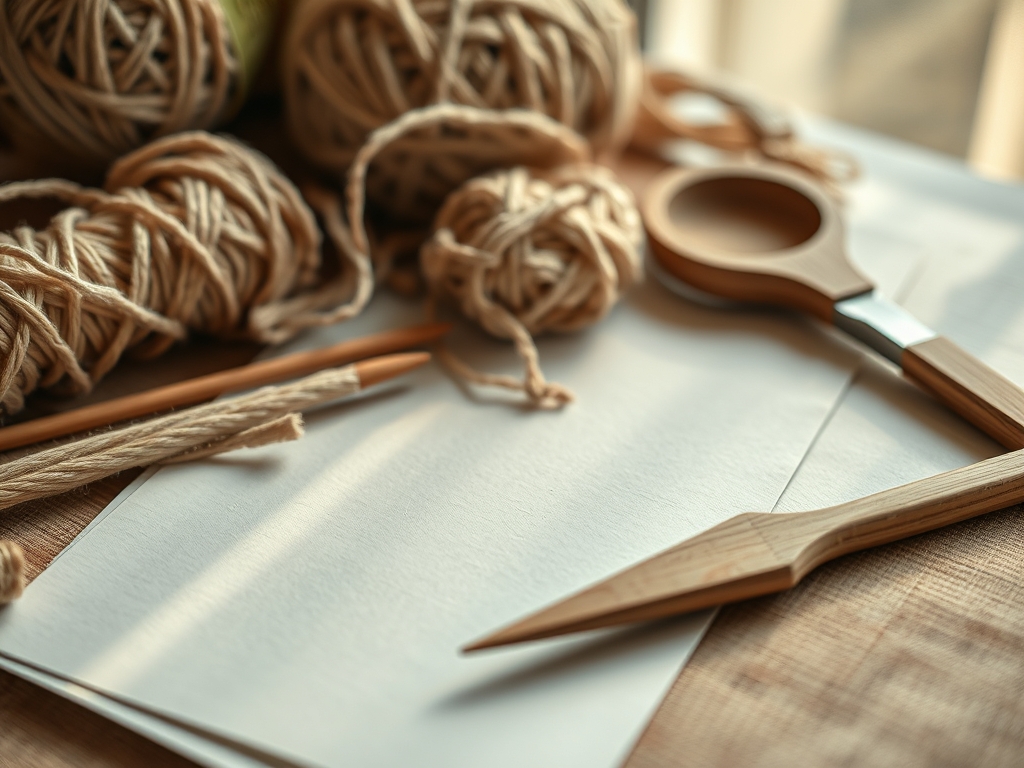
To achieve a professional finish, you need to respect the physics of your materials. For our primary project, a hand-bound leather journal, you will need a high-carbon steel awl for piercing through multiple signatures of paper. This tool must be kept sharp to prevent tearing the cellulose fibers. You will also need waxed linen thread, which offers superior tensile strength compared to synthetic blends. A bone folder made from genuine ox bone is essential for achieving a dead-flat crease without scorching the paper surface. For the cover, seek out vegetable-tanned leather with a thickness of 3 to 4 ounces; this provides enough structure to protect the pages while remaining pliable enough to wrap.
Material Substitutions: If you cannot source vegetable-tanned leather, a heavy-duty cork fabric or a recycled canvas treated with paraffin wax works beautifully. For the paper, if professional-grade Mohawk Superfine is unavailable, look for any acid-free 100lb text weight paper that has a visible grain direction. Always test the grain by gently bending the sheet; it will offer less resistance when folded parallel to the grain.
THE TEMPO
The "Maker's Rhythm" is not about speed; it is about the synchronization of breath and movement. You should allocate approximately four hours for a full-immersion project. The first hour is the Preparation Phase, where you measure and cut your materials with a rotary cutter and a self-healing mat. This phase requires high cognitive load and precision. The second and third hours are the Assembly Phase, where the repetitive motion of stitching or folding induces a meditative state. This is the peak of your digital detox. The final hour is the Refining Phase, dedicated to edge finishing and burnishing. This slower tempo allows the material to settle and the adhesives to cure properly.
THE CORE METHOD
1. Grain Alignment and Folding
Begin by identifying the grain direction of your paper. Folding against the grain fractures the cellulose fibers, resulting in a jagged, unprofessional edge. Once aligned, use your bone folder to create crisp signatures.
Mastery Tip: The science of the hinge effect relies on the compression of fibers. By applying even pressure with a bone folder, you collapse the air pockets between paper layers, increasing the structural integrity of the spine.
2. Precision Piercing with the Awl
Mark your sewing stations using a steel ruler and a graphite pencil. Place your signatures in a wooden punching cradle and drive the awl through the center fold. Ensure the tool is perpendicular to the paper to maintain alignment across all signatures.
Mastery Tip: This utilizes the principle of displacement. A sharp awl separates fibers rather than cutting them, which prevents the holes from enlarging or tearing under the tension of the thread later.
3. The Coptic Stitch Binding
Thread your needle with waxed linen and begin the link stitch. This method allows the book to lay completely flat when opened. Tension is key here; if you pull too hard, you risk "sawing" through the paper. If it is too loose, the book will feel unstable.
Mastery Tip: Friction-lock technology is at play here. The wax coating on the linen thread creates a microscopic bond with the paper fibers, ensuring the knots stay secure without the need for caustic glues.
4. Leather Tempering and Cutting
Lay your leather flat and use a square-edge ruler to map out the cover. Use a fresh blade in your utility knife to make a single, continuous pass. This prevents "stepping" along the cut edge, which occurs when you stop and start the blade.
Mastery Tip: Leather is a viscoelastic material, meaning it exhibits both thick and elastic characteristics. Cutting in one fluid motion prevents the material from stretching out of gauge under the pressure of the blade.
5. Beveling and Burnishing
Use an edge beveler to remove the sharp 90-degree corner of the leather edge. Apply a small amount of gum tragacanth and rub the edge vigorously with a wooden burnisher until it becomes glossy and smooth.
Mastery Tip: This process uses frictional heat to fuse the collagen fibers of the leather. The heat melts the burnishing compound into the pores, creating a water-resistant, hardened seal that prevents fraying.
THE TECHNICAL LEDGER
Maintenance & Longevity: To keep your handmade tools in peak condition, wipe steel blades with camellia oil to prevent oxidation. Store your bone folder in a soft cloth to avoid nicks that could mar future projects.
Material Variations: For a sustainable approach, use FSC-certified recycled paper and plant-based dyes for the leather. If you want a premium feel, upgrade to goatskin leather, which has a tighter grain and higher durability than cowhide.
The Correction:
- The Issue: Paper cracking at the spine. The Fix: You folded against the grain. Dampen the fold slightly with a sponge to soften fibers before re-pressing.
- The Issue: Loose binding. The Fix: Use a "surgeon's knot" at the start of your thread to provide an anchor point that won't slip through the first station.
- The Issue: Leather edges look "fuzzy." The Fix: You skipped the sanding step. Use 400-grit sandpaper before burnishing to level the fibers.
Studio Organization: Store your paper flat in a humidity-controlled environment. Storing paper vertically for long periods can cause "bowing" due to the weight of the cellulose. Keep your leather rolled, never folded, to prevent permanent creasing of the grain.
THE FINAL REVEAL
Look at that! You have successfully transformed raw, disparate materials into a functional piece of art. The weight of the journal in your hand is a testament to your focus. Notice how the light catches the burnished edges and how the signatures swell slightly at the spine; that is the mark of a hand-bound masterpiece. You didn't just make a book; you mastered the physics of tension, friction, and fiber density. Your brain is likely feeling refreshed, calm, and significantly more "plugged in" to the real world than it was four hours ago. This is the true power of crafting for digital detox.
STUDIO QUESTIONS
Why does my thread keep tangling?
This is caused by static and a lack of lubrication. Run your thread through a block of pure beeswax twice. This coats the fibers, reducing friction and preventing the ply from untwisting during complex stitching maneuvers.
Can I use a metal ruler for cutting?
Always use a stainless steel ruler with a cork backing. The steel prevents the blade from shaving the ruler, while the cork provides a high-friction grip that prevents the tool from sliding across your material during a cut.
What is the best way to sharpen an awl?
Use a fine-grit whetstone with a drop of honing oil. Rotate the awl as you draw it across the stone to maintain a perfect conical point. A sharp awl requires less force, reducing the risk of hand fatigue.
How do I prevent my leather from staining?
Apply a synthetic acrylic resolene or a natural beeswax cream. These sealants create a hydrophobic barrier on the surface of the leather, preventing oils from your hands or environmental moisture from penetrating the porous grain.