Imagine the scent of freshly cut cedar mingling with the sharp, metallic tang of cold-pressed steel. Your fingers trace the rough, fibrous surface of raw canvas before sliding over the cool, nonporous glaze of ceramic beads. This is the sensory rush of Crafting for Community Events; it is a high stakes symphony of texture and structural engineering. When you are prepping for a local fair, you are not just making trinkets. You are managing the tensile strength of fibers and the shear stress of adhesives to ensure every piece survives a thousand curious hands. We are going to build things that feel expensive, look professional, and hold up under the chaotic pressure of a crowded booth. Grab your safety glasses and a double espresso. We are diving deep into the physics of the handmade because your community deserves more than just hot glue and hope. We are going to master the art of the bulk build without sacrificing a single ounce of technical integrity or aesthetic soul.
THE STUDIO KIT
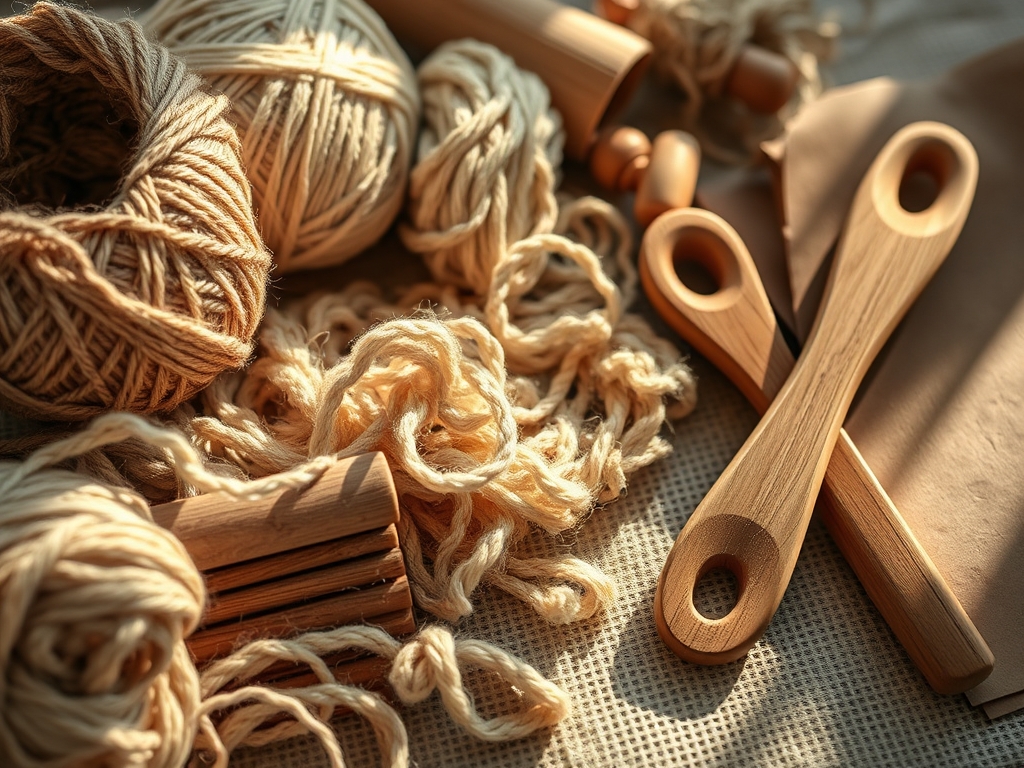
To dominate the local fair circuit, your toolkit must be an extension of your own biomechanics. We start with a precision rotary cutter and a self-healing mat; the blade must be surgical grade to prevent fraying on high-density textiles. You will need a stainless steel bone folder for creating crisp, permanent creases in heavy cardstock or leather; this tool relies on localized pressure to collapse the internal cellular structure of the material without tearing the surface. A set of digital calipers is non-negotiable for maintaining consistency across a production run of fifty items. For assembly, we utilize cyanoacrylate adhesives for instant bonds and polyvinyl acetate for porous materials that require a flexible, breathable seal.
Material Substitutions: If high-end birch plywood is over budget, look for MDF with a wood veneer; it offers superior dimensional stability and resists warping in humid outdoor environments. Swap expensive silk thread for bonded nylon if your project requires high abrasion resistance and UV stability for outdoor display.
THE TEMPO
The "Maker's Rhythm" is a flow state governed by the laws of thermodynamics and human endurance. You cannot rush the curing time of a polymer or the evaporation rate of a water-based dye. For a group project, we divide the labor into three distinct phases: the Prep, the Pulse, and the Polish. The Prep involves the heavy lifting; cutting, sanding, and priming; which takes roughly forty percent of your total timeline. The Pulse is the assembly phase where the components meet. This is the fastest part of the cycle, relying on muscle memory and ergonomic station setups. Finally, the Polish requires thirty percent of your time for quality control and finishing touches. By batching these tasks, you minimize the switching cost in your brain and keep the production line moving at a constant velocity.
THE CORE METHOD
1. The Foundation of Structural Integrity
Before you apply a single drop of pigment, you must analyze the grain direction of your substrate. Whether you are working with wood, paper, or leather, the material has a natural orientation that dictates its load-bearing capacity. Always cut parallel to the grain to maximize tensile strength.
Mastery Tip: This is about molecular alignment. When you align the fibers, you prevent the finished piece from bowing or snapping when exposed to the fluctuating humidity of an outdoor community event.
2. Precision Component Calibration
Use your digital calipers to measure every single component in your first batch of ten. Inconsistency is the enemy of professional crafting. If your holes are off by even half a millimeter, the torsional strain on your fasteners will cause the project to fail over time.
Mastery Tip: This relies on the principle of tolerance. By keeping your measurements within a tight margin, you ensure that every part is interchangeable, which is vital for rapid assembly in a group setting.
3. Controlled Adhesive Application
Apply your bonding agent using a fine-tipped applicator to avoid "squeeze-out." When two surfaces meet, the adhesive undergoes capillary action, pulling into the microscopic pores of the material to create a mechanical lock.
Mastery Tip: Understanding surface energy is key. Some plastics have low surface energy and require a primer to allow the adhesive to "wet" the surface properly. Without this, your bond is merely a temporary surface cling.
4. The Art of the Burnish
Whether you are finishing a leather edge or sealing a vinyl decal, the burnishing process is essential. Use your bone folder or a wooden slicker to generate friction. This heat slightly softens the fibers or adhesives, allowing them to fuse into a single, sleek unit.
Mastery Tip: This is a thermoplastic reaction. The localized heat helps the molecules intermingle at the interface, creating a water-resistant seal that prevents delamination.
5. Surface Tension and Finishes
When applying a topcoat, monitor the viscosity of your sealant. A finish that is too thick will trap air bubbles, while one that is too thin will fail to provide an adequate barrier against oxidation.
Mastery Tip: This involves surface tension. You want the sealant to "level" itself out before it begins to polymerize. This creates a glass-like finish that reflects light evenly, making your work pop under the harsh sun of a community fair.
6. Ergonomic Quality Control
Inspect each piece under a high-CRI (Color Rendering Index) light. This ensures that the colors are accurate and that there are no hidden structural flaws, such as micro-cracks in a ceramic glaze or skipped stitches in a textile.
Mastery Tip: This is about optical clarity. Professional makers use specific light spectrums to identify "stress whitening" in plastics or "grain raise" in wood that would otherwise go unnoticed until the customer gets it home.
7. Modular Packaging Design
Design your packaging to be as robust as the product. Use acid-free glassine for delicate surfaces to prevent chemical transfer. Your packaging should act as a secondary skin, protecting the item from the kinetic energy of transport.
Mastery Tip: This is a lesson in impact distribution. Good packaging absorbs the shock of a drop, protecting the structural integrity of the craft inside through crumple zones and rigid bracing.
8. The Final Stress Test
Subject a random sample from your batch to a "torture test." Apply pressure, simulate moisture exposure, and check for colorfastness. If the prototype holds, the batch is ready for the public.
Mastery Tip: This is empirical validation. By testing the limits of your materials, you can confidently guarantee the longevity of your work to every person who visits your booth.
THE TECHNICAL LEDGER
Maintenance & Longevity: To keep your creations pristine, advise customers to avoid direct UV exposure, which can cause photodegradation of organic pigments. A simple wipe with a microfiber cloth is usually enough to remove skin oils that can slowly corrode metal finishes.
Material Variations:
- Sustainable: Use cork fabric or recycled felt; these materials have excellent dampening properties and a low carbon footprint.
- Premium: Incorporate Grade 5 Titanium or Stabilized Burl for high-end accent pieces that offer incredible strength-to-weight ratios.
The Correction:
- Adhesive Failure: If a bond snaps, the surface was likely contaminated. Clean with isopropyl alcohol to remove oils before re-bonding.
- Warping: If wood or paper curls, the moisture content is uneven. Place the item in a humidity-controlled press to redistribute the internal tension.
- Fraying: If fabric edges unravel, the blade was dull. Use a fray-check solution to chemically lock the fibers at the cut line.
Studio Organization: Store your bulk components in airtight polypropylene bins with desiccant packets. This prevents moisture from compromising the hygroscopic nature of your materials, ensuring they remain "factory fresh" until the day of the event.
THE FINAL REVEAL
Look at that! You have transformed a pile of raw materials into a cohesive, professional collection through the sheer power of physics and precision. These pieces feel substantial in the hand because you respected the density and integrity of the build. When you set up your booth for Crafting for Community Events, you aren't just selling a product; you are presenting a masterclass in technical execution. The colors are vibrant, the edges are crisp, and the structures are sound. Go out there and show your community what happens when a "smart, witty girl" brings serious science to the craft table!
STUDIO QUESTIONS
How do I prevent wood from warping before an event?
Store your wood flat in a temperature-controlled environment. Avoid sudden shifts in humidity, which cause uneven expansion and contraction. Use a moisture meter to ensure the internal water content has stabilized before you begin cutting or assembly.
What is the best way to batch-cut fabric?
Use a heavy-duty rotary cutter with a fresh tungsten carbide blade. Stack your layers, but do not exceed the blade's radius. Use pattern weights to maintain constant pressure, ensuring the bottom layers do not shift during the cut.
Why did my paint peel off the metal?
The metal likely had a "mill scale" or oil coating. You must abrade the surface with fine-grit sandpaper to create a mechanical "tooth." Follow this with a chemical degreaser to ensure maximum interfacial adhesion for the primer.
How can I make my paper crafts more durable?
Increase the ply thickness by laminating multiple sheets together with a neutral-pH adhesive. Apply a thin coat of microcrystalline wax or a matte spray fixative to create a moisture barrier that prevents the fibers from absorbing atmospheric humidity.