Imagine the snap of a cold-pressed cotton sheet as it resists the humidity of your studio. You can feel the tooth of the paper under your fingertips; it is a landscape of tiny peaks and valleys waiting to be flooded. This is the sensory start of your Daily Watercolor Practice. When the first drop of pigment hits the water, it is not just art; it is a chaotic dance of fluid dynamics. We are going to master that chaos by building a visual library that maps every chemical reaction on your palette.
The physics of watercolor is all about surface tension and the molecular weight of minerals. When you watch a heavy sediment like Cobalt Blue sink into the fibers while a light phthalocyanine floats on top, you are witnessing gravity and particle size at play. We are going to harness that energy. This practice is not about making pretty pictures yet; it is about building the muscle memory and the technical data you need to become a master of the medium. Grab your brushes and let us get into the grit of the gear.
THE STUDIO KIT
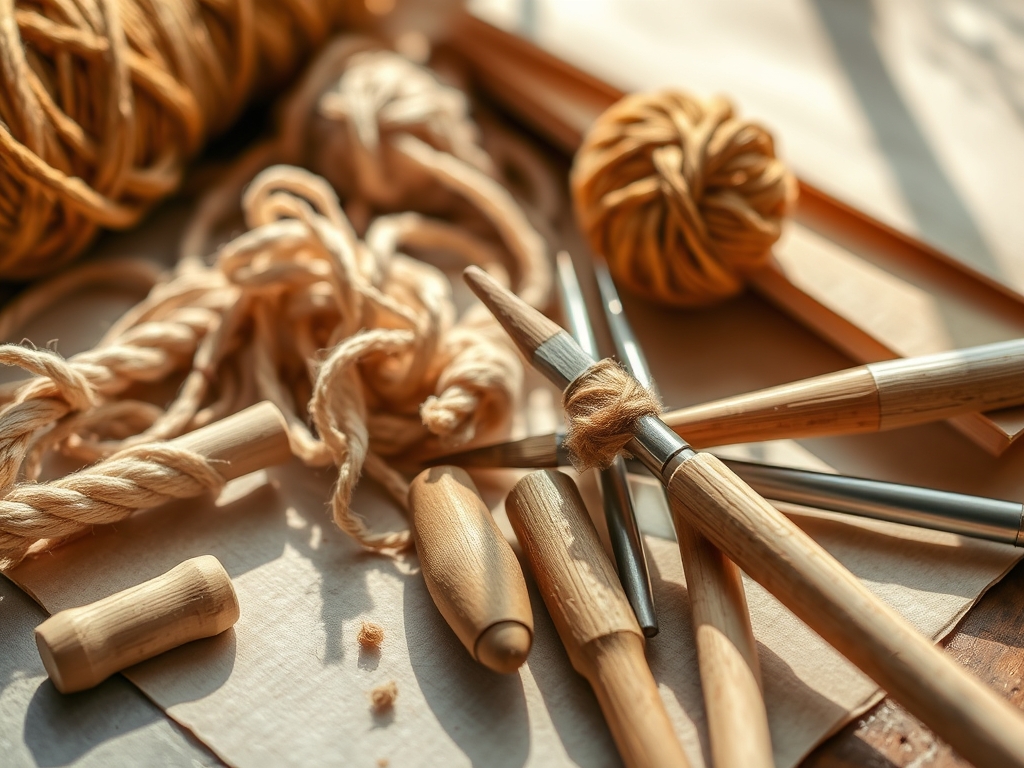
To execute a high-level Daily Watercolor Practice, your kit needs to be as precise as a laboratory. You need 100 percent cotton rag paper, preferably 140lb (300gsm) weight. This material has a high tensile strength that prevents warping when saturated. Unlike wood pulp paper, cotton fibers are long and interlocking, allowing them to expand and contract without losing their structural integrity. You will also need a bone folder to crisp your edges and a metal ruler to guide your layout.
Your brushes should range from a size 12 round for broad washes to a size 0 rigger for fine notations. Look for brushes with high snap; this refers to the hair's ability to return to its original shape after a stroke. For your pigments, focus on professional-grade tubes. Student grades contain fillers that mess with the refractive index of the paint, making your charts look muddy.
Material Substitutions: If you lack a professional porcelain palette, a white ceramic dinner plate works beautifully because it has a non-porous surface that prevents pigment staining. If you do not have a pipette for water control, a clean syringe or even a small spray bottle can manage the volumetric flow of your water supply.
THE TEMPO
The "Maker's Rhythm" is all about timing the evaporation rate of your medium. A standard mixing session takes about 90 minutes. The first 15 minutes are dedicated to hydration; you must pre-wet your pans or squeeze fresh tubes to ensure the binder is pliable. The next 60 minutes are the "Flow State," where you execute the actual mixing. This is a high-density period where you must work fast enough to keep a wet edge but slow enough to avoid cross-contamination.
The final 15 minutes are for the "Cure." Watercolor does not just dry; it sets. As the water evaporates, the gum arabic binder locks the pigment particles into the porous texture of the paper. If you move the paper too early, you disrupt the capillary action, leading to uneven "blooms" or back-runs. Respect the clock, and the clock will respect your gradients.
THE CORE METHOD
1. The Monochromatic Value Scale
Begin by drawing a five-box grid using a hard H-grade pencil to minimize graphite smearing. Start with your most concentrated pigment in the first box and incrementally add water for each subsequent square. This teaches you the pigment-to-water ratio, which is the fundamental math of watercolor.
Mastery Tip: Use a pipette to measure water drops. This ensures your dilution steps are mathematically consistent, allowing you to understand the exact saturation point where the binder can no longer hold the pigment.
2. The Primary Glaze Matrix
Create a grid where you overlap layers of the three primary colors. Allow the first vertical stripe to dry completely before applying the horizontal stripe. This tests the transparency and opacity of your specific brands.
Mastery Tip: Check the refractive index of your pigments. Some minerals, like Cadmium, are naturally opaque and will obscure the layer beneath, while Quinacridones are transparent and will create a perfect secondary color through optical mixing.
3. The Complementary Neutralization Chart
Mix two complements, like Ultramarine and Burnt Sienna, in varying degrees. This chart is your roadmap for creating "chromatic blacks" and sophisticated greys.
Mastery Tip: Observe the granulation. Heavier pigments will settle into the paper's valleys first. This is called sedimentary action, and it adds a tactile, three-dimensional quality to your washes that flat synthetic dyes cannot replicate.
4. The Wet-on-Wet Diffusion Map
Saturate a square of paper until it has a dull sheen, then drop in two different colors at opposite corners. Watch how they collide in the center. This is a lesson in fluid mechanics and surface tension.
Mastery Tip: If the water is too deep, the pigment will "float" and lose control. You want the paper to be hydrophilic (water-loving) but not flooded. The fibers should be swollen but not submerged.
5. The Transparency "Ladder"
Draw a thick black waterproof ink line across your paper. Paint different pigments over it to see which ones disappear and which ones sit on top.
Mastery Tip: This tests the particle size of the pigment. Larger particles (like Earth tones) will sit on top of the ink, while smaller particles (like Phthalo) will wrap around the ink fibers, remaining visible.
6. The Salt and Texture Resistance Study
Apply a wash and, while damp, drop in table salt or isopropyl alcohol. This creates a chemical reaction that displaces the pigment.
Mastery Tip: This is a study in ionic charge. Salt crystals pull water toward them through osmosis, dragging the pigment along and leaving starburst patterns. It is pure chemistry on a page.
7. The Lift-Ability Log
Paint a solid block of color, let it dry, then try to scrub it away with a stiff synthetic brush and clean water.
Mastery Tip: This measures the staining power of the pigment. Some pigments have a high affinity for cellulose and will bond permanently, while others simply sit on the surface and can be "lifted" easily.
8. The Limited Palette Harmony Square
Pick only three colors and see how many distinct hues you can create. This is the ultimate test of your color theory application.
Mastery Tip: Use a color wheel to verify your results. By limiting your palette, you force yourself to understand the chemical bias (warm or cool) of every tube you own.
THE TECHNICAL LEDGER
Maintenance & Longevity: To keep your charts pristine, avoid touching the painted surface with bare hands. The oils from your skin can create hydrophobic spots that repel future washes. Use a clean sheet of glassine paper between your charts when stacking them.
Material Variations:
- Sustainable: Look for bamboo or hemp-based papers; they have different absorption rates but are excellent for eco-conscious studios.
- Premium: Handmade papers with deckled edges offer a unique grain direction that can lead to unpredictable, beautiful washes.
The Correction:
- The Bloom: If you get an unwanted "cauliflower" edge, wait for it to dry, then lightly burnish the area with a damp brush to soften the hard line.
- The Mud: If your mix looks grey, you have likely mixed too many high-sediment pigments. Fix this by adding a staining transparent color to shift the hue.
- The Warp: If your paper buckles, flip it over, dampen the back, and press it under a heavy board overnight to restore its planarity.
Studio Organization: Store your mixing charts in a high-quality archival binder. Keep them away from UV light, as even "lightfast" pigments can undergo photodegradation over decades of exposure.
THE FINAL REVEAL
Look at that! You have just built a technical manual for your own creativity. Your Daily Watercolor Practice has transformed from a simple hobby into a sophisticated study of mineralogy and fluid dynamics. You can now look at any tube of paint and predict exactly how it will behave when it hits the fibers. That confidence is what separates a beginner from a master. Your studio is now a lab, your brushes are your instruments, and your paintings are about to get a whole lot more intentional. Go forth and flood those pages!
STUDIO QUESTIONS
How do I prevent my watercolor paper from buckling?
Ensure you are using at least 140lb paper and stretch it before use. Tape the edges to a rigid board while damp; as it dries, the fibers tighten, increasing the tensile strength and ensuring a flat working surface.
Why do my colors look dull once they dry?
This is known as the "drying shift." Water increases the refractive index, making wet paint look darker. As water evaporates, the pigment particles settle. Use professional-grade paints with higher pigment loads to minimize this dulling effect.
What is the best way to clean my brushes?
Use a dedicated brush soap and cool water. Avoid hot water, which can melt the ferrule glue. Always store them horizontally or head-down in a drying rack to prevent water from rotting the wooden handle's internal core.
Can I use a hair dryer to speed up the process?
Yes, but use the "cool" setting. High heat can make the gum arabic binder brittle, leading to cracking. Keep the dryer moving to ensure even evaporation and to prevent the air pressure from pushing the pigment into unwanted "runs."